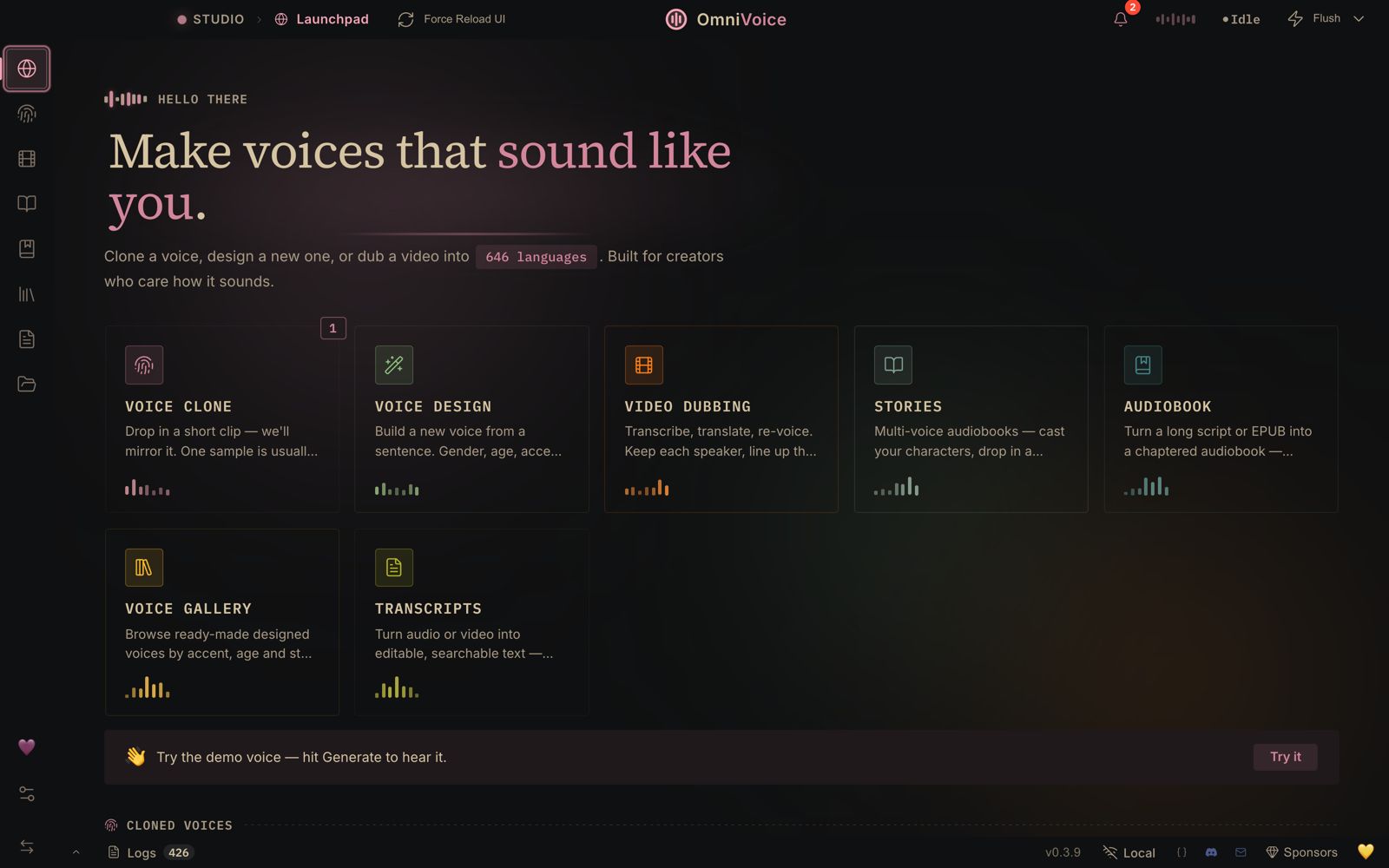

VoiceStudio, a free application that clones voices and dubs videos on your computer, is approaching 95,000 stars on GitHub. The app is free, but the default installed voice model prohibits commercial use, and using only the CPU significantly slows down generation.
The VoiceStudio repository showed 94.9k stars on October 30, according to Trendshift, which counts 82,898 stars gained in 61 days, between August 31 and October 30. The same site ranked it number one for the day, across all languages, several times in September. Two names appear as project maintainers, Palash and Shimul Debnath, the latter having joined the core team with version 0.5.7 on October 26, and 21 contributors are listed: the circulating figure of “two developers” is therefore incomplete.
Viral posts draw a simple conclusion: ElevenLabs would be finished, since a free repository would do the same thing on a laptop. However, the project’s documentation tells a more nuanced story, involving model licenses, required hardware, and an application still in beta.
What VoiceStudio does: clone, dub, and design voices without an account or API key
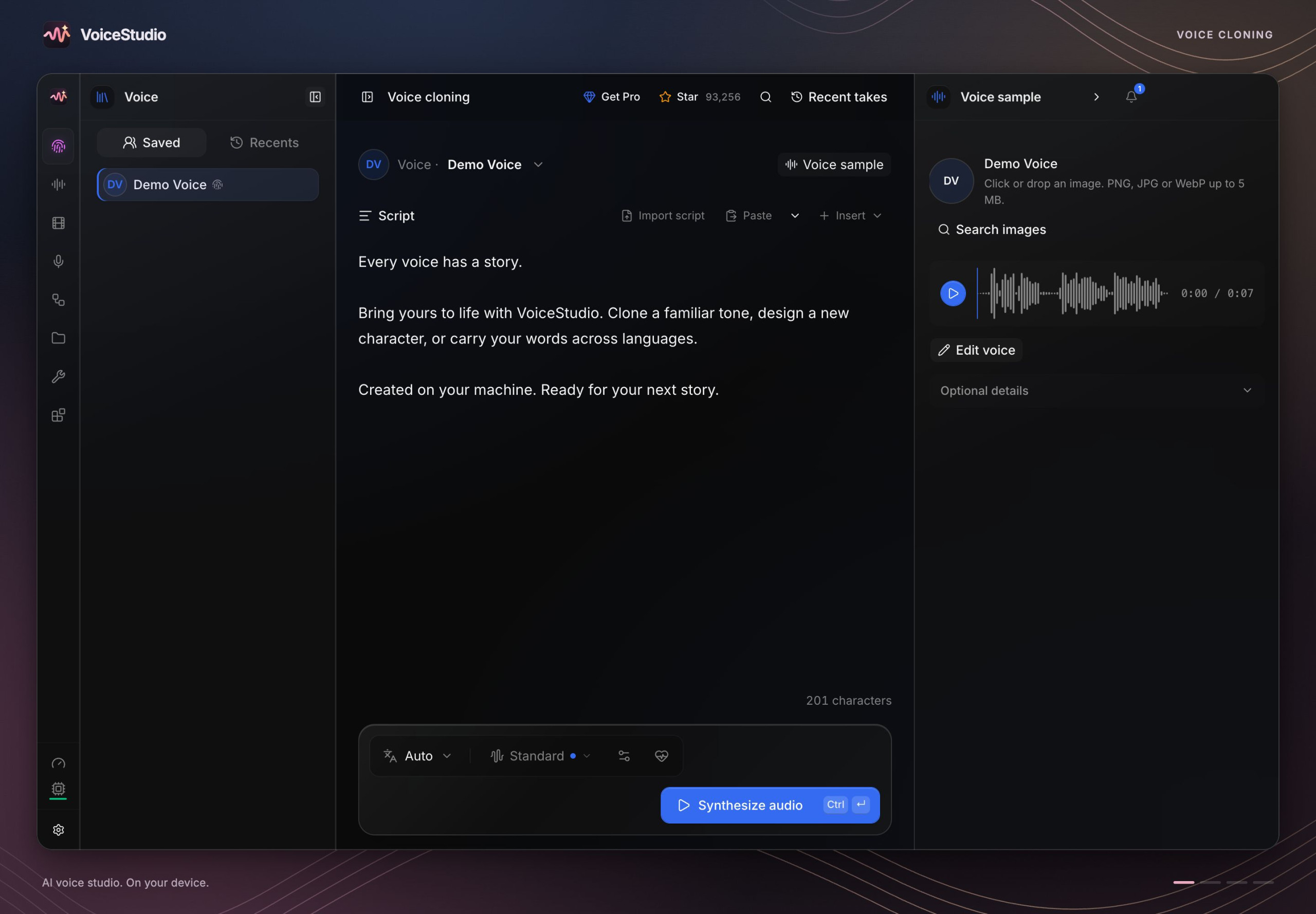
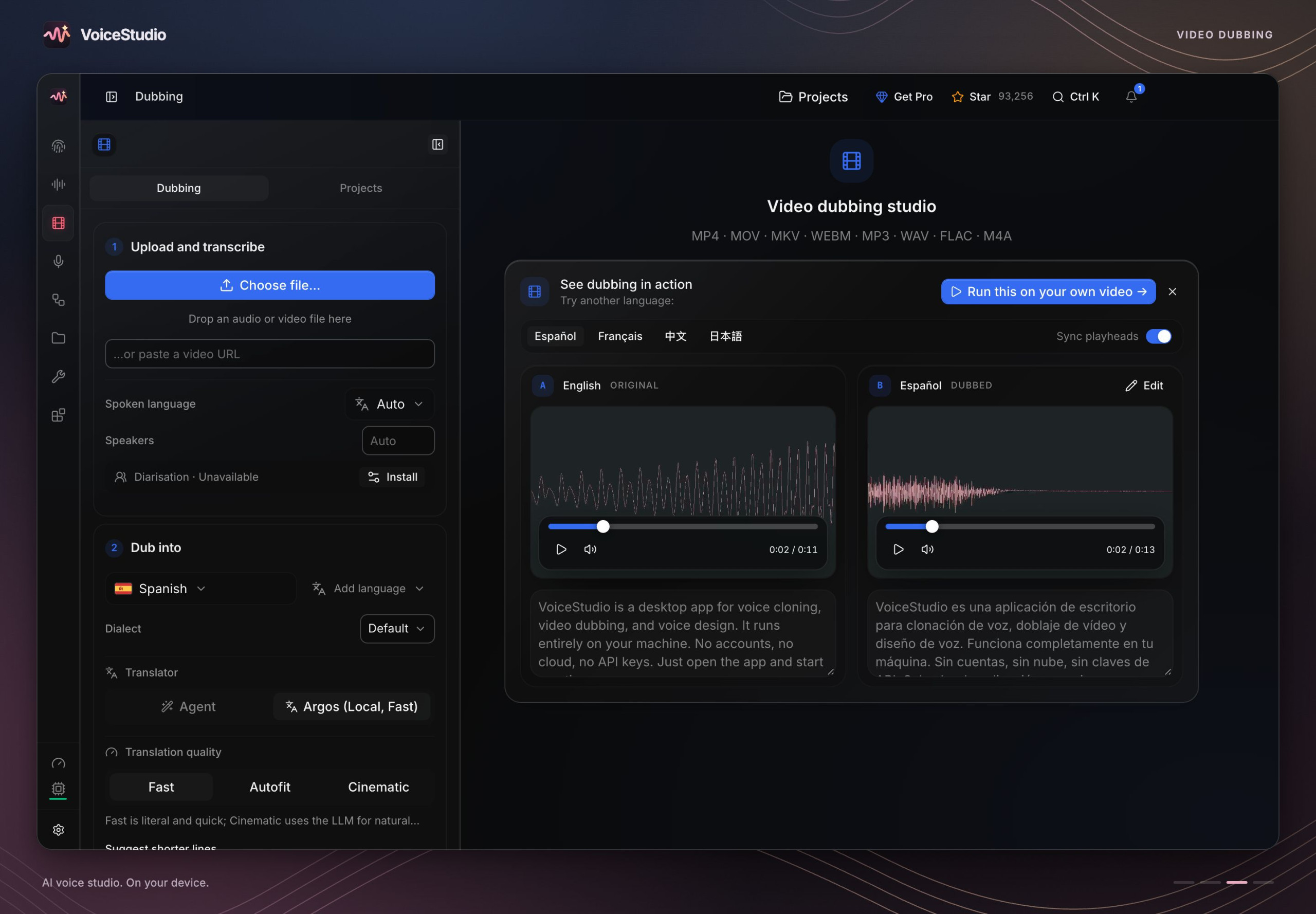
VoiceStudio, formerly OmniVoice Studio, is an open-source desktop application that bundles voice cloning, voice design, video dubbing, dictation, transcription, and audiobooks, according to its official website. Everything runs locally: no account, API key, or subscription is needed for these functions, and the app only connects to the internet for updates and model downloads. It also requires the voice owner’s consent before cloning.
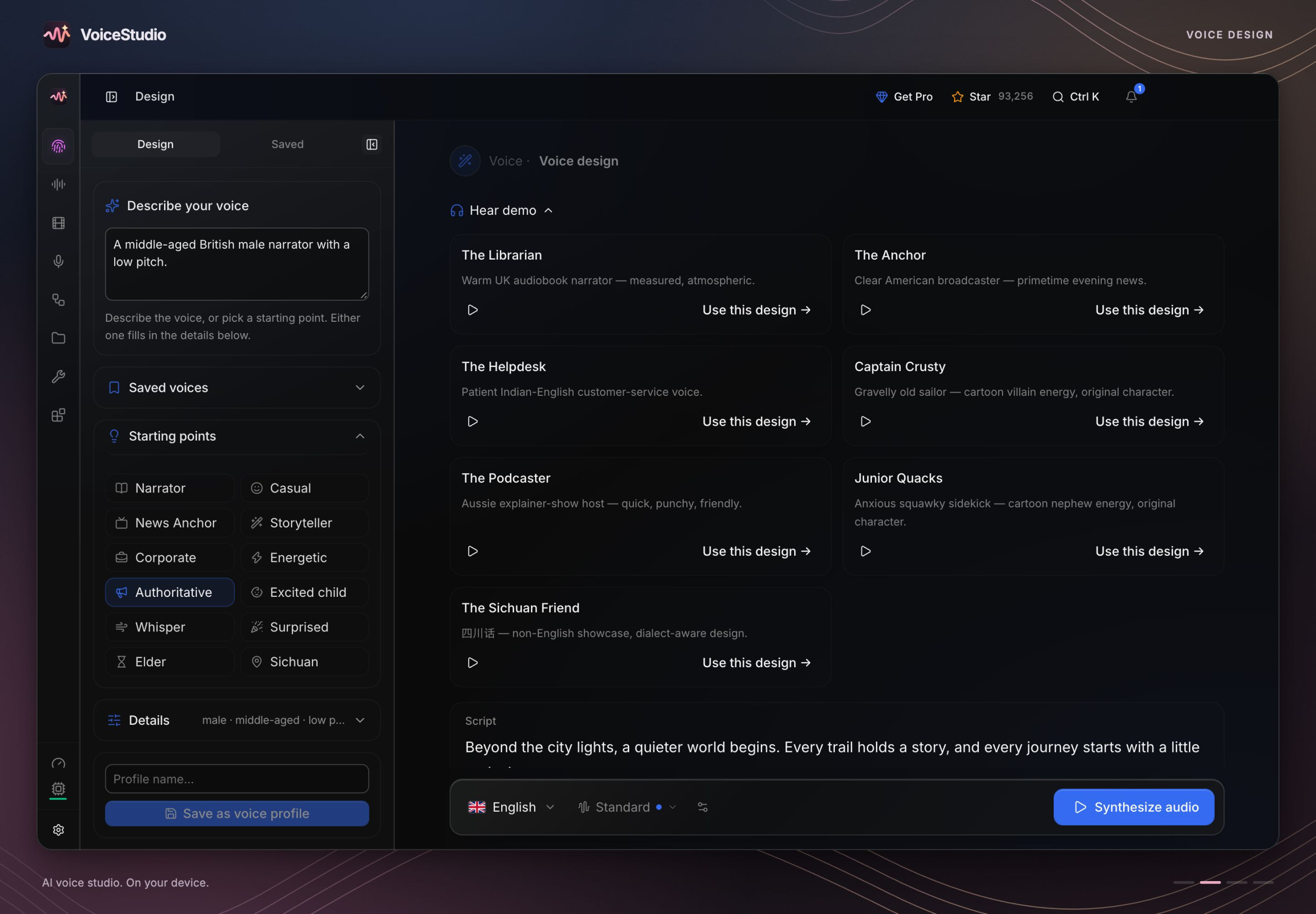
For cloning, Clubic indicates that 3 seconds of sample audio are enough for a first try, although 5 to 15 seconds are recommended. Voice design starts from a written description: the site cites the example “female, middle-aged, low pitch, British accent”. The app runs on macOS, Windows, Linux, and Docker, and in a “preview” version on Android and iOS.
As for the 646 languages announced, the site specifies that availability varies by engine, task, and version. This figure is therefore not valid for every dubbing.
Commercial use: application under AGPL-3.0, default model under CC-BY-NC
The repository is published under the AGPL-3.0 license, and the project’s license page specifies that commercial use of the application does not require a separate license, while the terms for models and outputs must be checked separately. It is this second part that changes everything for anyone wanting to produce and sell.
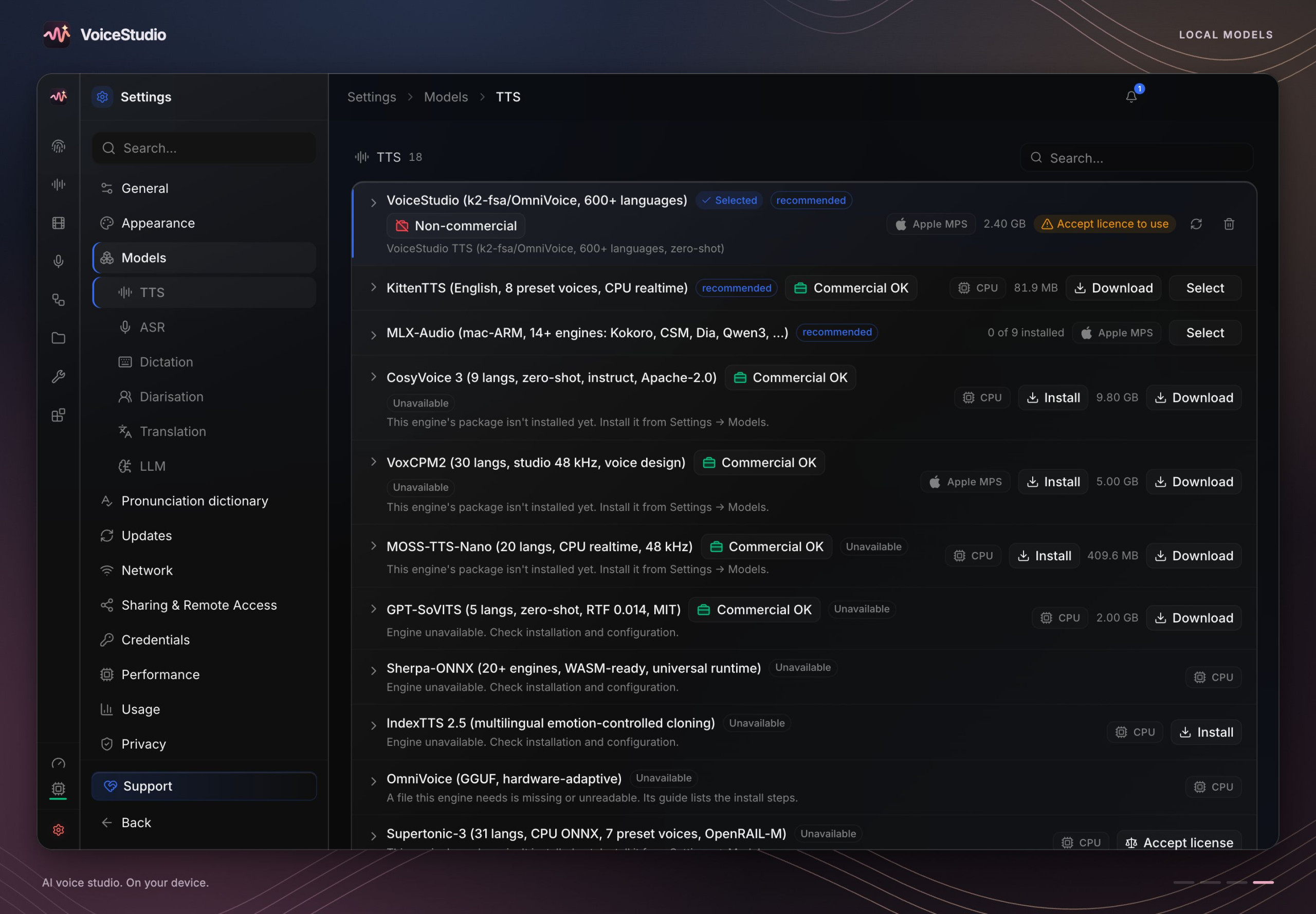
The default model, OmniVoice, developed by k2-fsa, is not free for all uses. Its code is under Apache 2.0, but its pre-trained weights are under CC-BY-NC, its authors write on Hugging Face, because some training data imposes this restriction. The model screen in the application indeed displays “Non-commercial” next to the default engine, and “Commercial OK” next to several alternative engines, some of which still need to be installed.
If you’re aiming for commercial use, you must therefore check engine by engine, and not rely on the word “free”. The site also announces a “Pro” offer, presented as “Coming soon”, at $99 per year or $199, with a commercial license. This is not the same promise as the “100% free” claim in viral posts.
Does VoiceStudio run without a GPU? 8 GB of RAM is enough to start
The site indicates that about 8 GB of RAM is enough to start and that a GPU accelerates everything. The project’s documentation warns that using only the CPU is about 2 times slower than an Apple chip (MPS), and even more so compared to an NVIDIA card (CUDA). In this context, if you plan to produce a lot of voice content, “without GPU” means “possible”, not “fast”.
On Windows, PyTorch acceleration is limited to NVIDIA cards: AMD and Intel GPUs fall back to the CPU, except with certain engines. An Intel Mac only serves as an interface and requires a remote server. Clubic adds that the app is still in beta and generation can be slow without a suitable GPU.
ElevenLabs remains on sale, with 10,000 free credits per month
The ElevenLabs pricing page still shows a free plan with 10,000 credits per month, then a Starter plan at $6 per month which includes a commercial license. Tiers go up to $990 per month for the Business offer, and the Enterprise offer is custom-quoted. The company’s blog post also mentions VPC deployment, as well as on-premise and on-device deployment in early access for businesses.
Between the two, the debate is less about being free and more about the license, speed, and quality. We have not found any independent, quality comparison between VoiceStudio and ElevenLabs, and the engines offered by the app do not all have the same terms of use. The question remains: how many of the 94.9k stars come from users who have read the model licenses?