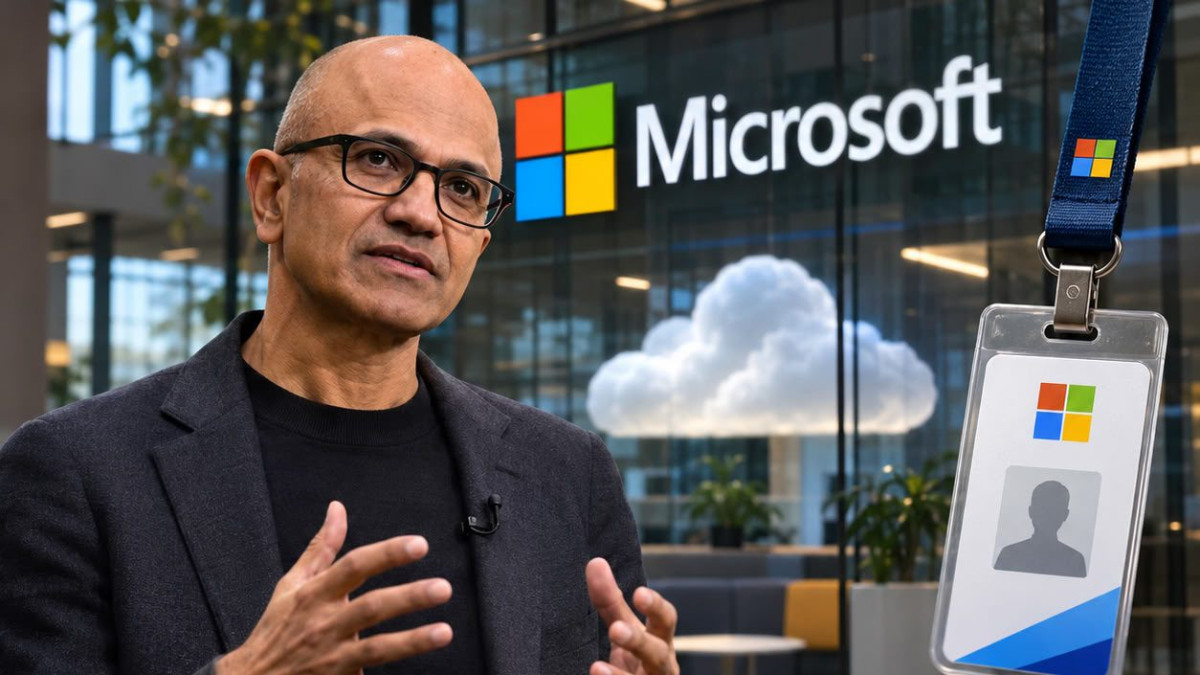

Microsoft CEO Satya Nadella explained why the company is offering voluntary departures to around 60,000 employees. According to him, this initiative aims to give employees more control over their careers, as AI transforms how teams operate. At the same time, Google has expanded its own voluntary departure programs to its employees in several countries.
In October 2026, Microsoft offered voluntary departures to around 60,000 employees, nearly a quarter of its workforce, as the company sought to manage its headcount while avoiding layoffs. Eligible employees in vice president roles or below in the United States, Canada, India, and the United Kingdom were to receive a “voluntary departure offer” including a standard severance package, with a decision deadline until early December. In a note to employees, Microsoft’s head of human resources, Amy Coleman, stated that this initiative was a continuation of the voluntary departure program launched earlier this year. Several divisions were fully participating in the program, including those dedicated to gaming, Windows, Copilot, human resources, and finance.
In an interview with the YouTube channel The Pragmatic Engineer, Satya Nadella addressed concerns that this unusual program could signal AI-related layoffs. He stated that Microsoft foresees many opportunities in the coming years, but the nature of roles and how teams operate will be different. He also acknowledged that not all teams are adapting at the same pace. “Let’s give everyone more agency to position themselves in roles that match their long-term economic prospects,” he said. According to him, employees who feel they can no longer grow should be able to change roles rather than remain in a situation where they feel stuck. “I don’t want to be stuck in a team that isn’t transforming, even within Microsoft itself,” he added, indicating that employees should be able to “vote with their feet” if they don’t see enough prospects within their current teams.
Nadella admitted that this transition is causing uncertainty and anxiety among employees. However, he clarified that Microsoft wants to be transparent about these changes, rather than letting people think that working methods will remain unchanged.
A Profound Shift in Software Engineering Workflows
Nadella also discussed how AI is transforming the work of software engineers, as AI tools take on an increasing share of the coding process. He noted that engineers traditionally spent a large part of their time writing code and developing their programming skills. As these tools disrupt this process, some experienced professionals are struggling to adapt to this new way of working. Nevertheless, according to the CEO, this does not make their expertise any less valuable: engineers will need to use their knowledge differently and learn to work with these new tools.
At the same time, a new generation of engineers is entering the job market with a natural familiarity with AI tools. Nadella highlighted the growing importance of roles like field-deployed engineers (FDEs), who work closely with customers to help them implement and use technologies. He said that responsibilities between different teams are increasingly overlapping, forcing employees to develop a broader range of technical skills.
These developments are not limited to Microsoft. According to an article, Google also began offering voluntary severance packages in June to some of its employees in Canada, France, Germany, Japan, and Switzerland. This program affected several divisions in Switzerland but excluded its AI research unit, DeepMind. This move comes as Google reallocates its resources towards priority areas, including AI and cloud computing.
More broadly, the sharp reduction in headcount in the technology sector continued in 2025. As AI reshaped business models and companies focused on operational efficiency, the human cost of technological transformation became stark, with some of the world’s most valuable companies simultaneously investing billions in AI while eliminating traditional roles.
