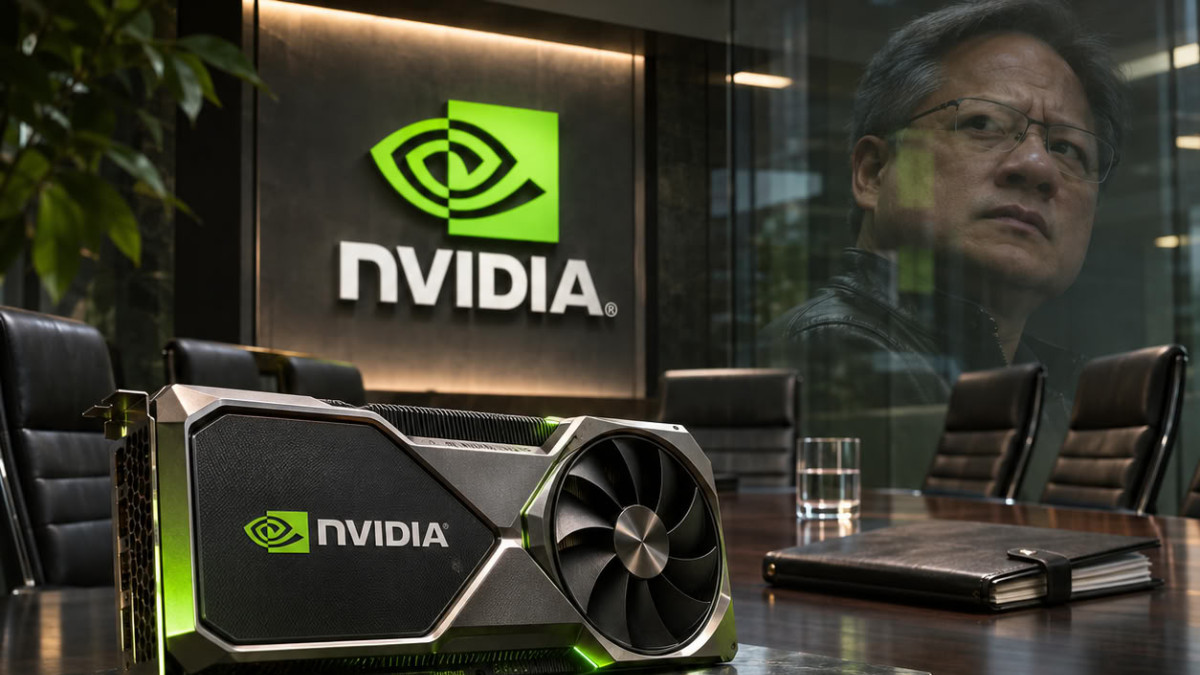

Nvidia’s board of directors accepted the resignation of Jensen Huang, its former CEO, who found himself at the center of a case involving the company’s relations with China. The board is facing a broader question, that of a potential security and governance crisis.
For the board, the possibility that Alice Huang acted on behalf of the Chinese government weighs more heavily than the personal conduct of an executive. If she was acting as an agent of Chinese intelligence services, according to the source, the case would not only concern the alleged ‘lack of candor’ of Jensen Huang. These accusations, like the facts underpinning them, have not been established.
The case is already fueling arguments from proponents of stricter controls on US commercial relations with China. Several government agencies and offices have called for investigations into what the former executive knew about the arrival of Nvidia chips in China. The company’s chief legal officer, Tim Teter, has also been summoned to Washington to testify, as authorities seek to determine whether Nvidia may have circumvented export controls.
Divided Shareholders and Employees
Nvidia and Jensen Huang are also facing several shareholder lawsuits. They accuse the company and its former executive of making misleading statements about their relations with Alice Huang and with Megaspeed. Other Silicon Valley investors have publicly denounced corporate governance and executive oversight deemed insufficient by the board.
At the general meeting on November 18, board chairman Harvey Jones said, according to remarks seen by WIRED, that it was ‘not an easy decision to accept [Huang’s resignation].’ He added that ‘the disclosure of personal conduct and a lack of candor incompatible with the company’s code of conduct, standards, and values’ had made this decision necessary.
Within the company, several employees question the speed with which the board accepted the resignation. A business-side staff member states: ‘We feel they forced him to resign.’ According to the media Semafor, a small faction of the board of directors also wants Huang back, while the board is divided on the issue. Huang said he would be ‘honored’ to return as CEO. US President Donald Trump, for his part, renewed his call on Friday to give him another chance: ‘He made bad decisions, but he’s a brilliant person,’ he told reporters.
An Interim Leadership Under Pressure
The interim CEO, Colette Kress, indicated during that meeting that employees’ main concern was the drop in Nvidia’s stock price, followed by the board’s decision to remove Huang. She announced salary increases to address the first concern, without committing to communicate the results of the board’s investigation or its deliberations on Huang’s case.
A computer scientist working at Nvidia summarizes the feeling of some colleagues: ‘The ship has sunk, but there’s no plan to be transparent about what happened. It feels like a black box.’
