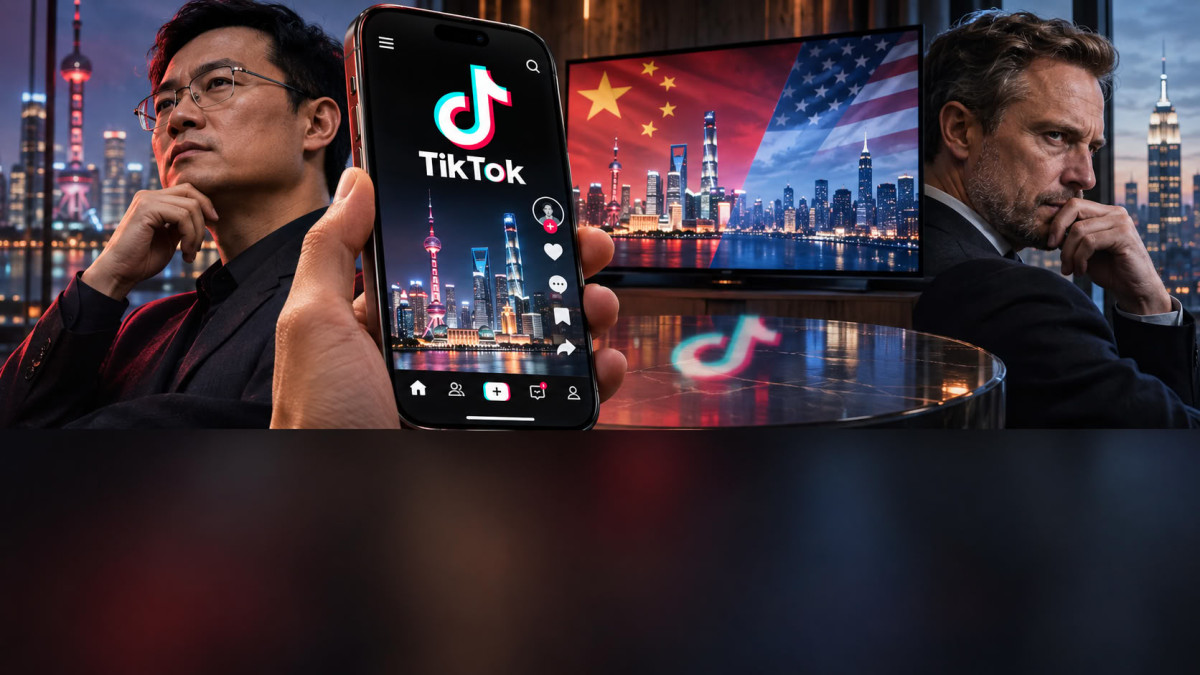

A France 5 documentary examines the technological rivalry between the United States and China through two social platforms. Titled ‘Instagram/TikTok: The Social Media War,’ it is directed by Jaouhar Nadi and aired on Tuesday, November 17 at 9:05 PM. The film shows how these applications, born for entertainment, have become tools of political influence.
The question of technological supremacy arises in a context of intense competition between Washington and Beijing, which some call a new cold war, this time digital. According to the documentary, American hegemony is weakened by the rise of China, which displays its ambition to surpass the United States.
The Rise of TikTok Against American Giants
In 2017, the Chinese startup ByteDance launched the TikTok app, which quickly established itself against Facebook and Instagram. Its success accelerated in 2020, during the Covid-19 pandemic lockdowns, notably thanks to its recommendation algorithm, i.e., the system that selects the content offered to each user. ‘The user no longer needs to tell the platform what they like; it directly finds what pleases them,’ explains Jaouhar Nadi, the documentary’s director.
This success with younger generations initially surprised and worried American tech leaders, foremost among them Mark Zuckerberg, the head of Meta. After years of efforts to establish his social networks in China, without success, he changed his tone in 2019 and denounced Chinese competition, accusing it, among other things, of resorting to censorship. For Océane Herrero, a digital journalist at Politico and author of the book The TikTok System, this evolution reflects the awareness that ‘American hegemony in the social media market was potentially ephemeral.’
When the Platform Enters Politics
In 2020, while the Covid-19 pandemic was still raging in the United States, Donald Trump was preparing a first major campaign rally in Tulsa, Oklahoma. A week before the gathering, Mary Jo Laupp, an American citizen close to the Democratic camp, called in a video posted on TikTok for opponents of the billionaire to reserve seats for the event without attending. The message went viral, and thousands of young people relayed it by hijacking the registration system, inflating reservations.
The campaign team, expecting to host nearly a million people, ultimately saw the arena stands remain largely empty. ‘There were only 6,000 people out of a million tickets reserved,’ recalls Mary Jo Laupp. Images of this failure quickly circulated on TikTok. Océane Herrero points out that the platform was, at that time, so little monitored politically that ‘no advisor or activist had identified this phenomenon.’
Donald Trump then threatened to ban TikTok, before showing support for the app during his 2024 campaign against Kamala Harris. Jaouhar Nadi notes that he decided to defend the social network, in contrast to the Biden administration, which at the time wanted to regulate the Chinese platform. In December 2025, TikTok announced the creation of a joint venture majority-owned by American investors tasked with overseeing its operations in the United States, ending a long legal process that threatened to lead to its ban in the country.
The documentary is also available on the france.tv platform.
