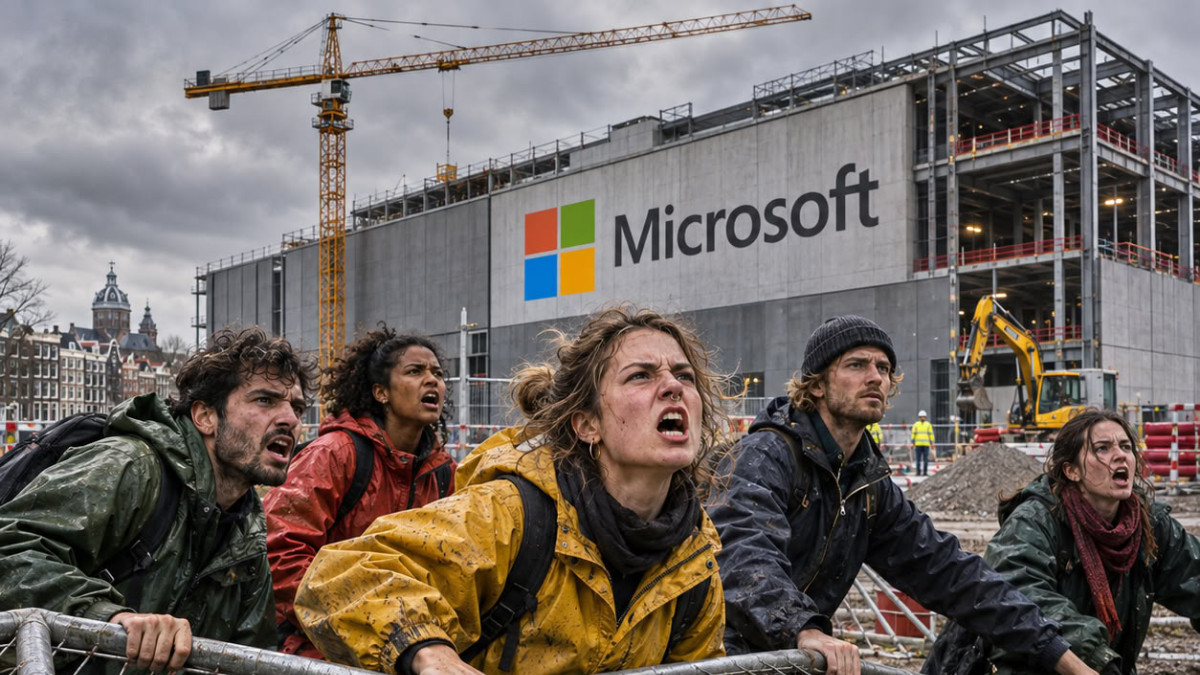

On Friday, November 6, 2026, protesters stormed the construction site of a major Microsoft data center located on the western outskirts of Amsterdam. Some broke through a fence, while others climbed a construction crane, and riot police made several arrests.
- Activists stormed a Microsoft data center construction site in Amsterdam, and police made several arrests.
- The mayor had banned the protest, and police blocked the march toward the site.
- Critics say the site will use as much electricity as all Amsterdam households combined.
- Opposition is growing in the United States, where voters rejected data center projects and residents sued Microsoft over noise.
A protest banned by the mayor
According to a witness, around a hundred people managed to enter the site, but a spokesperson for the activist group Geef Tegengas claims that about 500 people got in, while several hundred others remained outside. Police were dispatched near Sloterdijk, in the city’s western port area. Earlier in the morning, they had blocked the procession heading towards the site. The mayor had then banned the protest, and demonstrators attempted to breach the police cordon.
The organizers accused the police of inappropriate behavior and stated that the right to protest had been violated. This mobilization was part of two days of action against data centers, planned in several European countries on November 6 and 7.
A contested project
Geef Tegengas, which campaigns against fossil fuels, is calling for the construction to be halted. The group claims the site will consume as much electricity as all of Amsterdam’s households combined and that it will slow down the construction of 30,000 new homes.
The project, which Microsoft will lease in its entirety, consists of three buildings each 85 meters high. Plans were first submitted in 2016, before Amsterdam banned the construction of new data centers in the city. However, the provincial government authorized its implementation in January. According to the project’s critics, it circumvents Dutch regulations concerning very large data centers. Municipal officials, for their part, have warned that shortages on the power grid threaten plans to build new homes and schools.
The site had already been targeted in July: activists from Extinction Rebellion had then thrown balloons filled with acid and paint over the fence.
Distrust spreading to the United States
During the US midterm elections, voters in 10 states voted on nearly 40 referendum measures related to data centers, rejecting these projects. This vote made the tech industry’s energy consumption a major political issue. This observation is shared even within Microsoft’s ranks: a company lawyer admitted that “no one really wants a data center in their backyard.”
Opposition is also being expressed in court. In July 2026, residents of Wisconsin sued Microsoft, claiming that its recently completed AI data center in Mount Pleasant was producing excessive noise from diesel generators and vast cooling systems. According to the plaintiffs, this persistent noise causes sleep disturbances and headaches, and lowers property values. They are seeking damages and court-ordered measures.
