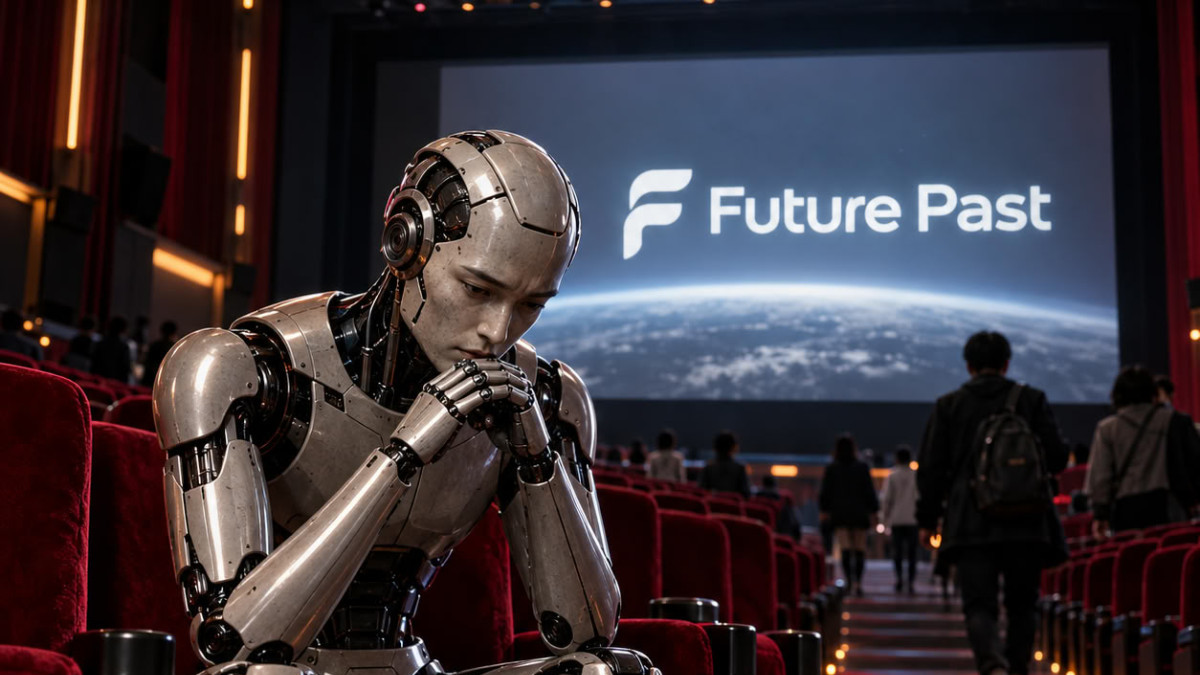

The first film entirely made with artificial intelligence was released in Chinese cinemas on October 23, in several hundred theaters. Titled San xing dui: Future Past, it is struggling to attract audiences during its first weekend of release.
The feature film, with a runtime of 1 hour 40 minutes, follows a team of young archaeologists who discover the magical powers of ancient masks from Chinese history. They are then propelled into a parallel world. The film blends mythology and science fiction.
Its directors used neither real sets nor human actors, and did not reproduce the faces of known stars. Everything was created by platforms that generate images and sounds from prompts, meaning written instructions given to AI programs. Critics fault the film for lacking depth and naturalness, and judge that its sets appear completely artificial.
Often empty theaters
The figures for the first weekend of release are modest. The film earned less than 200,000 euros, despite being screened over 10,000 times across the country. Many theaters were almost empty.
The production cost, however, remained limited: 1.4 million euros, with AI-based production helping to contain expenses. The producers present this release as a first test, intended to gauge the market’s reaction.
An audience accustomed to short formats
Chinese producers point out that viewers already watch a large number of fictions made by AI, but in very short formats and on their smartphones. In China, several mini-series of this type are meeting with great success on Douyin, TikTok’s parent company internationally. The challenge for studios, therefore, is to bring this content to the big screen and convince the public to pay for a ticket.
Other AI-generated films are in preparation, notably in the United States. An animated film is due for release in cinemas on December 4. Its title, ‘Gods don’t give gifts’, means ‘the gods don’t give presents’.