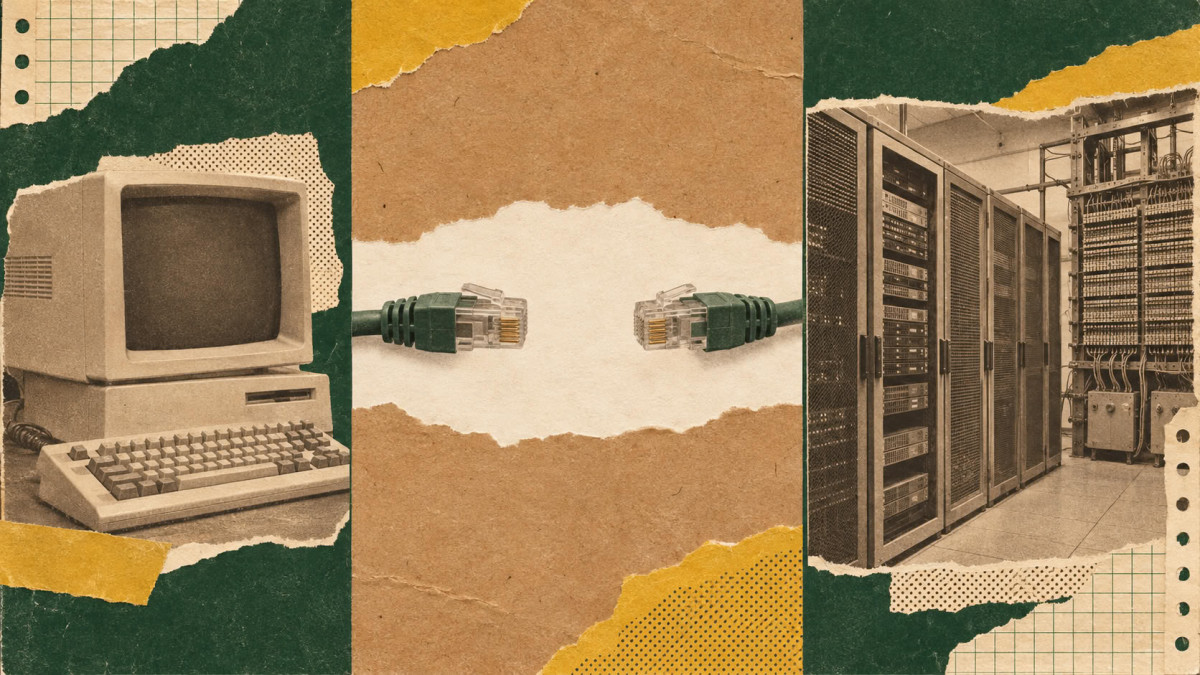

Artificial intelligence is accelerating cyberattacks and highlighting the flaws of an internet that was not designed for current uses. In an op-ed, the author argues for building, alongside the existing internet, a second network based on trust.
Arpanet, which dates back to 1969, initially connected a handful of American research institutions. Its early protocols prioritized the flow and resilience of communications, without integrating the authentication and security mechanisms now considered essential. More than half a century later, this same architecture carries payments, medical records, the control of power grids, and now, artificial intelligence agents, programs capable of performing tasks on behalf of a user.
A threat changing in nature
In its Panorama of the Cyber Threat 2025, ANSSI lists 3,586 security events and 1,366 incidents. Despite an 18% decrease in the number of events compared to 2024, the pressure remains considerable. The very nature of the threat is evolving, according to the op-ed.
In late 2025, coordinated and destructive cyberattacks targeted Polish energy infrastructure, damaging industrial equipment without causing widespread power outages. In April 2026, Anthropic presented its Mythos Preview model, capable of identifying numerous software vulnerabilities, while initially limiting its access due to the risks associated with its capabilities. According to the op-ed, AI is now accelerating the discovery and potential exploitation of flaws, dangerously reducing the time available to fix them. Therefore, piling protections on a vulnerable foundation will no longer be enough.
A network of trust, alongside the old one
The author believes the sophistication of cyberattacks could lead to creating a new internet, not by shutting down the old one, but by building a secure-by-design network alongside it, intended for exchanges whose compromise or interruption would have major consequences. He recalls that Arpanet was born from a public initiative, supported by US federal funding, before its technologies contributed to the global internet. Private and sectoral networks already show that architectures with different rules can coexist on the same physical infrastructure.
Estonia, faced in 2007 with a wave of cyberattacks against its administrations, banks, and media, strengthened the resilience of its digital state. Its X-Road infrastructure authenticates participating systems and encrypts, signs, and logs communications. The country also established a data embassy in Luxembourg to preserve essential information. In Switzerland, the SCION architecture, developed at the Swiss Federal Institute of Technology in Zurich, allows for the selection of authorized communication paths. Since June 2024, the Secure Swiss Finance Network, based on SCION, serves as an access network to the SIC interbank payment system, which processed an average of around 226 billion Swiss francs per day in 2024. For its part, Europe is preparing EuroQCI, a quantum communication infrastructure involving all twenty-seven member states.
Limits to keep in mind
The Swiss banking network remains a secure sectoral infrastructure, not a universal internet. SCION does not protect against all forms of attacks, particularly those exploiting applications or compromised identities. The op-ed also notes that a closed network could become an instrument of control, power concentration, or digital fragmentation. The challenge would therefore be to organize two complementary levels of trust: an open internet for exchange and discovery, and certified, collectively governed networks for vital activities.
For leaders, the author suggests asking three questions in an executive committee: which flows are truly critical, do they still transit via the public internet without sufficient guarantees, and which trust networks could be joined or created with their peers and supervisory authorities. The NIS2 directive, whose transposition scope concerns around 15,000 entities in France, already strengthens cybersecurity and resilience requirements.
