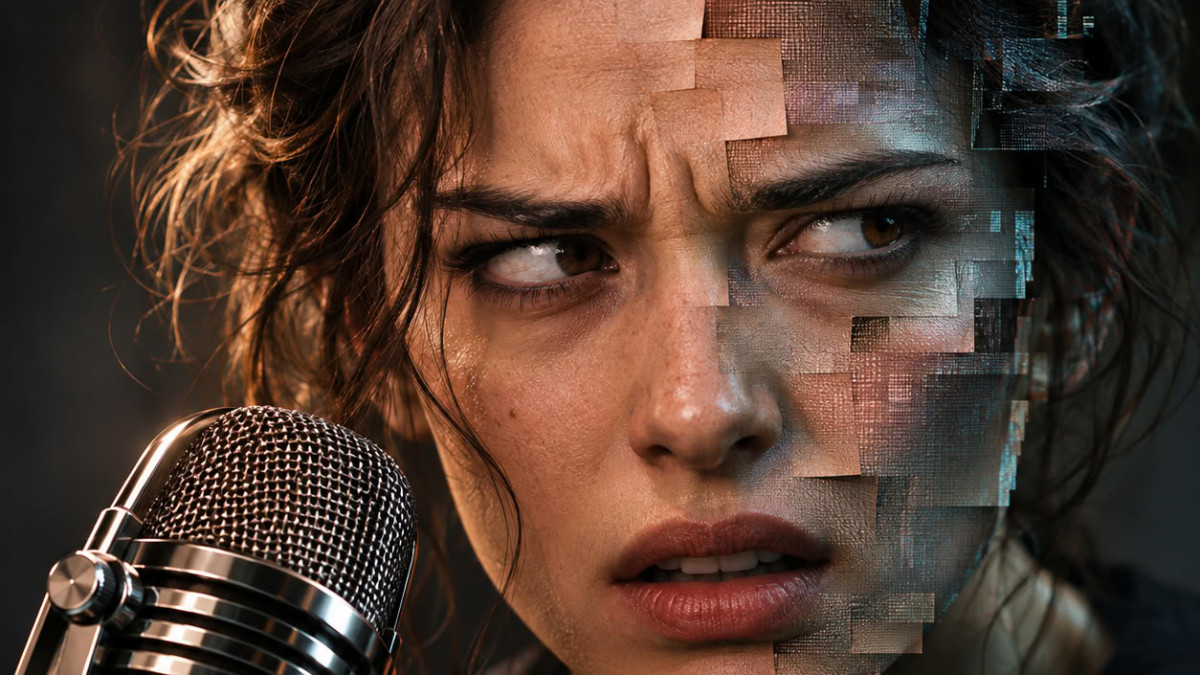

A deepfake is an image, video, or audio recording created or altered using artificial intelligence to make it appear that a real person said or did something that never happened. While this technology is used in film, education, or artistic creation, it is also used to deceive, humiliate, or blackmail. A person’s face or voice can thus be used without their consent.
The most common scenario is voice cloning fraud. A manager calls via video conference and requests an urgent transfer, or a loved one phones to say they are in trouble. The voice is familiar, and the victim rushes to help, unaware that the person they are speaking to is not who they think. Criminals thus imitate the voice of a relative, a manager, or a public figure to obtain money, access to accounts, or confidential information. Authorities warn against the use of generative AI to create fake voice messages, fake video conferences, and fake profiles.
Intimate content
Intimate deepfakes are particularly harmful. A photograph can be integrated into an artificial pornographic image or video, then disseminated or used to threaten the victim, extort money from them, or exert control over them. Images of school-age minors are also used for this purpose. Even if fabricated, the content causes very real humiliation, fear, and damage to reputation. The responsibility lies with the person who creates or disseminates this content, not with the person whose face was used.
How to protect yourself
When faced with an urgent request for money or confidential information, it is recommended not to act immediately, even if the voice seems familiar. One should call back the number saved in their contacts or use another means of communication. Agreeing with loved ones on a password for emergency situations, and limiting access to personal photos and videos, are other precautions mentioned. If fake content appears online, one should keep the links, messages, and screenshots, report it to the platform, and seek help, without sharing it in turn.
However, spotting a deepfake is becoming increasingly difficult based on a single visual or audio detail. Errors in facial expressions and sound are gradually disappearing, and automated detection tools do not guarantee reliable results. Current detection technologies still have significant limitations.
For a long time, a photograph or recording seemed sufficient to prove what had happened, through phrases like ‘I saw it with my own eyes’ or ‘I heard it myself.’ Now, according to the article, ‘an image or even a familiar voice is no longer enough.’ Trust must also be based on verifying the identity of the person showing the content, and their intentions.
