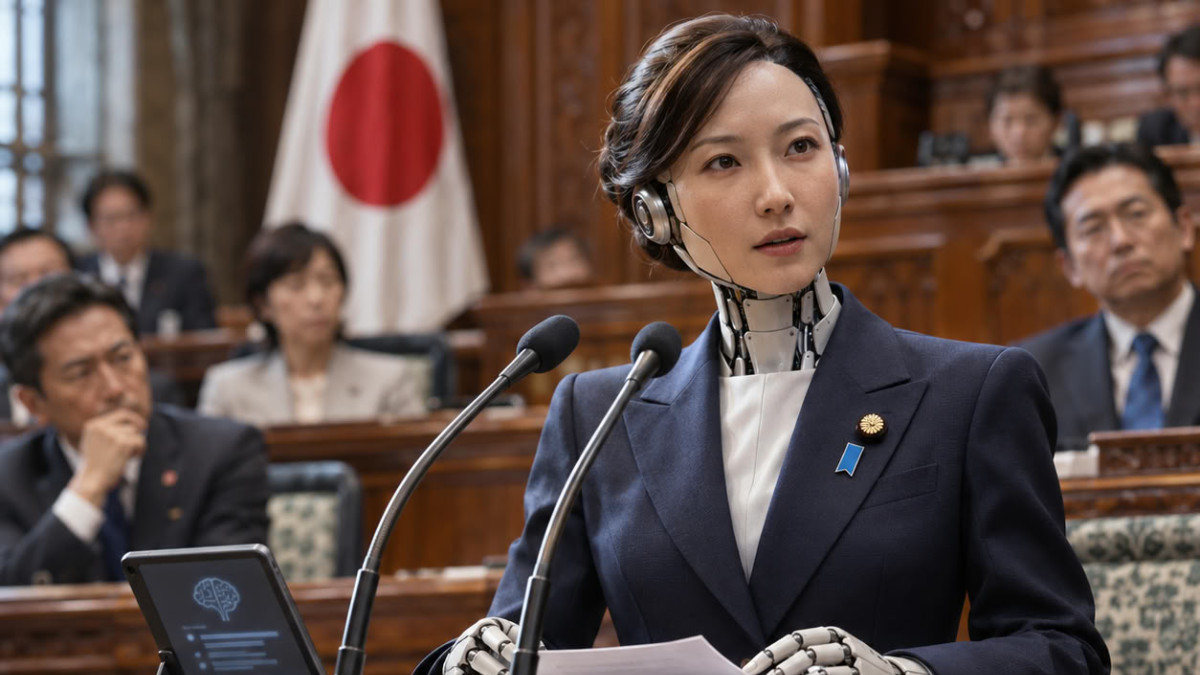

The Japanese government has just set up an artificial intelligence platform designed to save time for senior officials tasked with documenting responses to parliamentarians. The idea is to ease the climate of debate in Parliament, the Diet.
- Le gouvernement japonais utilise une IA générative pour aider ses hauts fonctionnaires à rédiger les réponses aux parlementaires.
- L’outil s’appuie sur 80 ans d’archives parlementaires et gouvernementales.
- La rédaction prend désormais quelques minutes au lieu de sept heures.
- Des critiques redoutent des réponses uniformes et des erreurs, mais le gouvernement affirme que l’humain relira toujours et que le ministre restera responsable.
Very demanding question sessions
The Diet devotes long hours to government question sessions. Most laws are proposed by the ruling conservative majority, largely the same since the 1950s, with the Liberal Democratic Party leading the executive. The opposition, whether centrist or left-wing, is very weak: it therefore uses these sessions to exist and try to trap the executive.
This tense climate weighs on senior ministry officials, who spend hours preparing answers that are unlikely to cause a scandal. Questions are normally submitted the day before the sessions. On average, they spend seven hours and 16 minutes on each one, coordinating between ministries, searching archives, or comparing with policies in other countries. According to the source, the teams are exhausted and have less time for actual government work.
An internal application based on generative AI
The government’s Digital Agency has just launched an internal application based on generative AI, systems capable of producing texts from prompts. It has integrated 80 years of parliamentary and government archives: all laws, amendments, and records of Diet debates. This collection constitutes the political memory of power, and officials now use it to draft their ministers’ responses.
The work now takes only a few minutes, instead of seven hours previously. For now, only a few voices are denouncing the use of this new application. Some senior officials fear uniform responses, lacking the political commitment expected from a government.
Others point out that AI can make mistakes and produce what specialists call hallucinations, i.e., completely invented but seemingly coherent answers. In response to these criticisms, the Japanese government states that AI will remain only a support for advisors’ work, that human editing will always be done, and that the minister will ultimately be solely responsible for the relevance of their position.
