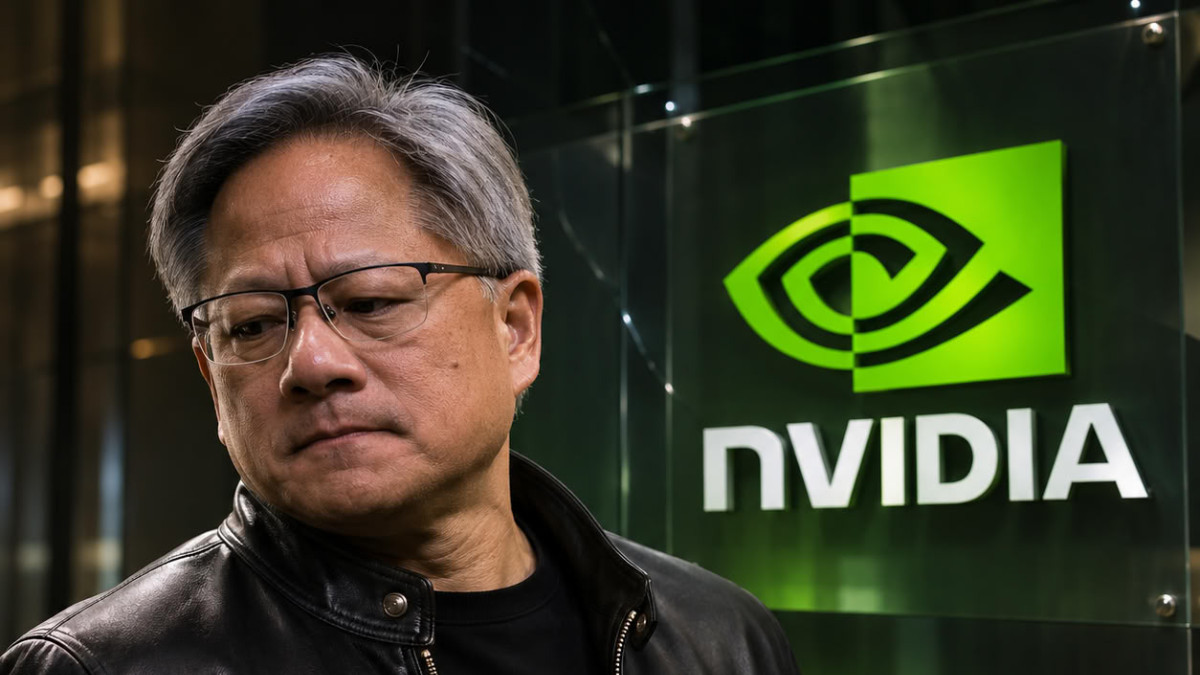

Nvidia CEO Jensen Huang resigned on Thursday, November 12, following revelations by the American press about two extramarital affairs, one of which was with a woman suspected of being a Chinese spy. Guest on franceinfo’s morning show on Friday, November 13, Cyril Gelibter, a doctor of history and intelligence specialist, discussed this case affecting the American leader in chips used by AI giants.
Signs as early as 2025
According to Cyril Gelibter, several elements already hinted at difficulties at Nvidia in 2025. He cites a Financial Times article from July 2025, which indicates that Nvidia chips had reached China through indirect channels, amounting to at least one billion dollars. He also mentions a New York Times article from September 2025, which noted the links between the Nvidia boss and this Chinese woman, without specifying they were lovers.
Jensen Huang is also due to be summoned to testify before the US Senate. Beijing denies having sought to spy on anyone, and the franceinfo guest stresses that we must wait for evidence before drawing conclusions.
The case of Alice Huang
The woman cited in this case is named Alice Huang. She shares the same surname as the Nvidia CEO, but has, according to the source, no family relation to him. Her biography still contains many grey areas: she is said to have been a television presenter before going into business, and is said to have run a company based in Singapore, Megaspeed International PTE Limited.
This company buys chips, and Cyril Gelibter recalls that suspicions have existed since 2024 that some of them reached China via Malaysia. He mentions in particular the H100, H200, and A100, high-performance Nvidia chips, while Washington has imposed export restrictions on them. He adds that Huawei is developing its own chips, like the Ascend 910C, but needs significant investment, which would still force it to source from Western companies. He bases this on the 2025 annual report of the US-China Economic and Security Review Commission, a body little known to the general public.
A risk for Europe and France?
Asked about a possible “Chinese-style kompromat,” meaning the use of compromising information to exert pressure, the historian recalls precedents. In 1983, French authorities arrested diplomat Bernard Boursicot, compromised by Chinese services several years earlier while posted in Beijing. He also cites the Guojia Anquanbu, the Chinese Ministry of State Security, responsible for counter-espionage and border protection, in addition to foreign intelligence.
In his view, sensitive individuals are not always sufficiently prepared. He mentions a degree of naivety, the allure China can exert, and classic methods like friendship, kompromat, or money. He cites two cases of CIA officers arrested for providing information to Chinese secret services, as well as two former DGSE officers. Since a 2023 law, the French Ministry of Defense can prohibit former military personnel from working for China or other countries after their retirement, when the services offered are deemed too sensitive.
For leaders of strategic companies, Cyril Gelibter believes prevention remains essential. He indicates that exposed personnel are in theory briefed, and that the FBI has the mission to alert bosses and employees about the ways China may attempt to seduce them. “Unfortunately, the human soul always has weaknesses,” he concludes.
