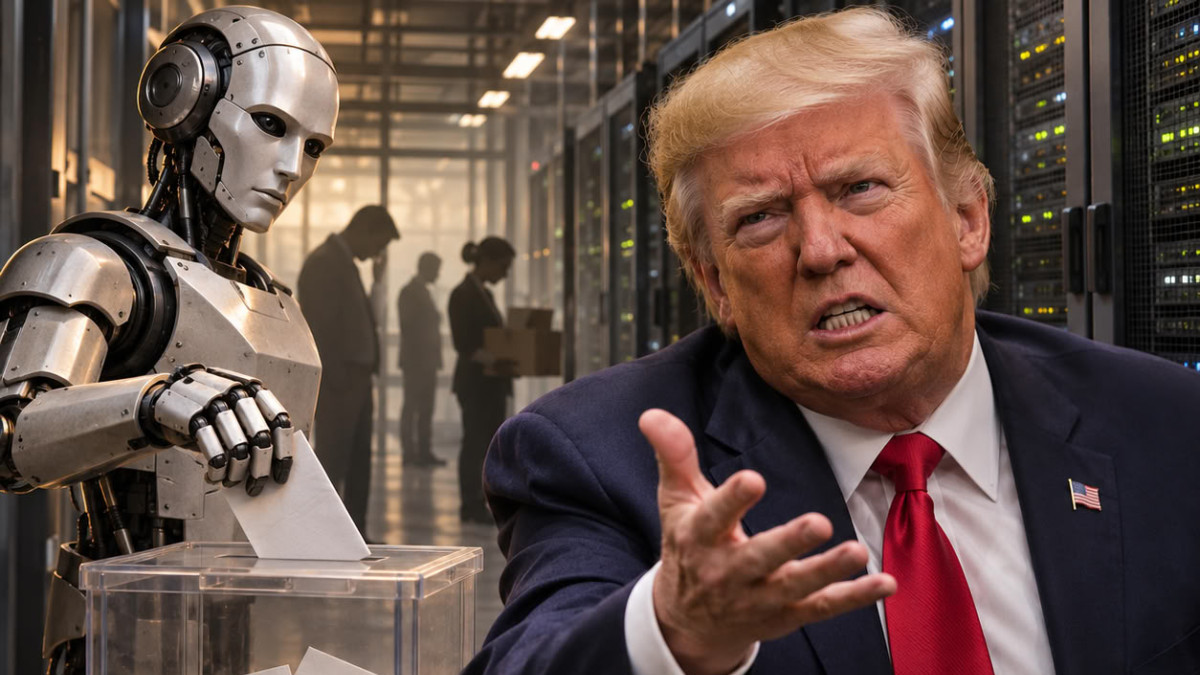

Following heavy Republican losses in the midterm elections, several figures from the MAGA movement are now pointing the finger at artificial intelligence. Data centers, essential for training models, and threats to jobs are said to have influenced several decisive races. An embarrassing observation for a party that counts tech giants among its key allies.
AI companies heavily funded Republican campaigns, and the Trump administration’s closeness to billionaires in the sector has become a subject of criticism. A portion of the electorate is worried about their growing influence, job cuts, and the establishment of massive data centers. According to an Associated Press poll, three out of four American voters oppose the construction of a data center in their community.
“Conservatives were furious about data centers,” acknowledges Kevin Roberts, president of the Heritage Foundation, a powerful conservative think tank, in an interview with the Financial Times. According to him, the left “brilliantly succeeded, politically speaking, in seizing this issue instead of the right.” Co-author of Project 2025, a conservative program that heavily inspired the Trump administration’s policies, he continues to support the president, who stated in August that opponents of data centers would end up “backward and poor.”
The party also benefited from hundreds of millions of dollars in donations from sector leaders, notably Elon Musk. Numerous tech executives attended Donald Trump’s inauguration in January 2025, dined at the White House, and invested in his ballroom. In late September, they signed a voluntary AI code of conduct in front of the president, which Donald Trump called almost constitutional. But this closeness could now cost the party dearly at the ballot box.
Kevin Roberts believes Republicans were wrong not to take voters’ concerns more seriously. “These tech companies imposed their will on us and think they can make us swallow whatever they want,” he denounces to the Financial Times.
A Campaign Focused on Data Centers
The issue notably weighed in several contested elections for the House of Representatives and the Senate, particularly in Texas, a state poised to surpass Virginia in the number of data centers. Democratic candidates, including Governor-elect Gina Hinojosa, campaigned against their proliferation and against the influence of tech billionaires. The 52-year-old attorney promised an immediate moratorium on the construction of these facilities upon taking office, while outgoing Republican Governor Greg Abbott wanted to make Texas “the epicenter of artificial intelligence development.”
Elected Democratic senators, such as James Talarico and Sherrod Brown (Ohio), also denounced the impact of these infrastructures on communities, whether it be rising electricity prices or the nuisances and pollution they generate. James Talarico recounted the story of a five-year-old child who woke up every night, convinced it was daytime, because of the floodlights from a data center installed opposite his parents’ house.
The issue was also financial. According to AdImpact data, over $380 million was spent on television ads mentioning data centers during the campaign. Elon Musk reportedly invested over $480 million to support Republican candidates. During a meeting organized on Wednesday, November 11th by the Heritage Foundation, Republican Chip Roy, a Texas Representative, stated that voters are not only unhappy with these facilities’ water and electricity consumption. According to him, they are primarily exasperated by the rhetoric of tech leaders, which he summarized as: “You’re going to lose your job in ten years, you’ll have a universal income,” while “you’ll have this big box in your yard, and you’re going to love it, because we have to beat China.”
A Stakes Issue for the 2028 Presidential Election
During that same meeting, Republican pollster Kristen Soltis Anderson described concerns around AI as the “background music” of these elections. “In 2028, you won’t be able to escape the need to have a clear position on technology’s role in our economy, our society, and even in what it means to be human,” she warned.
Democrats want to multiply bills to regulate AI and data centers, and scrutinize the links between the Trump administration and tech giants. Massachusetts Democratic Senator Ed Markey, a longtime critic of these groups, warned on X: “We’ll need to plant new forests to absorb all the subpoenas we’re going to print.” The president retains his veto power, however. OpenAI, for its part, called on newly elected officials to establish “clear rules on how the industry builds.”
