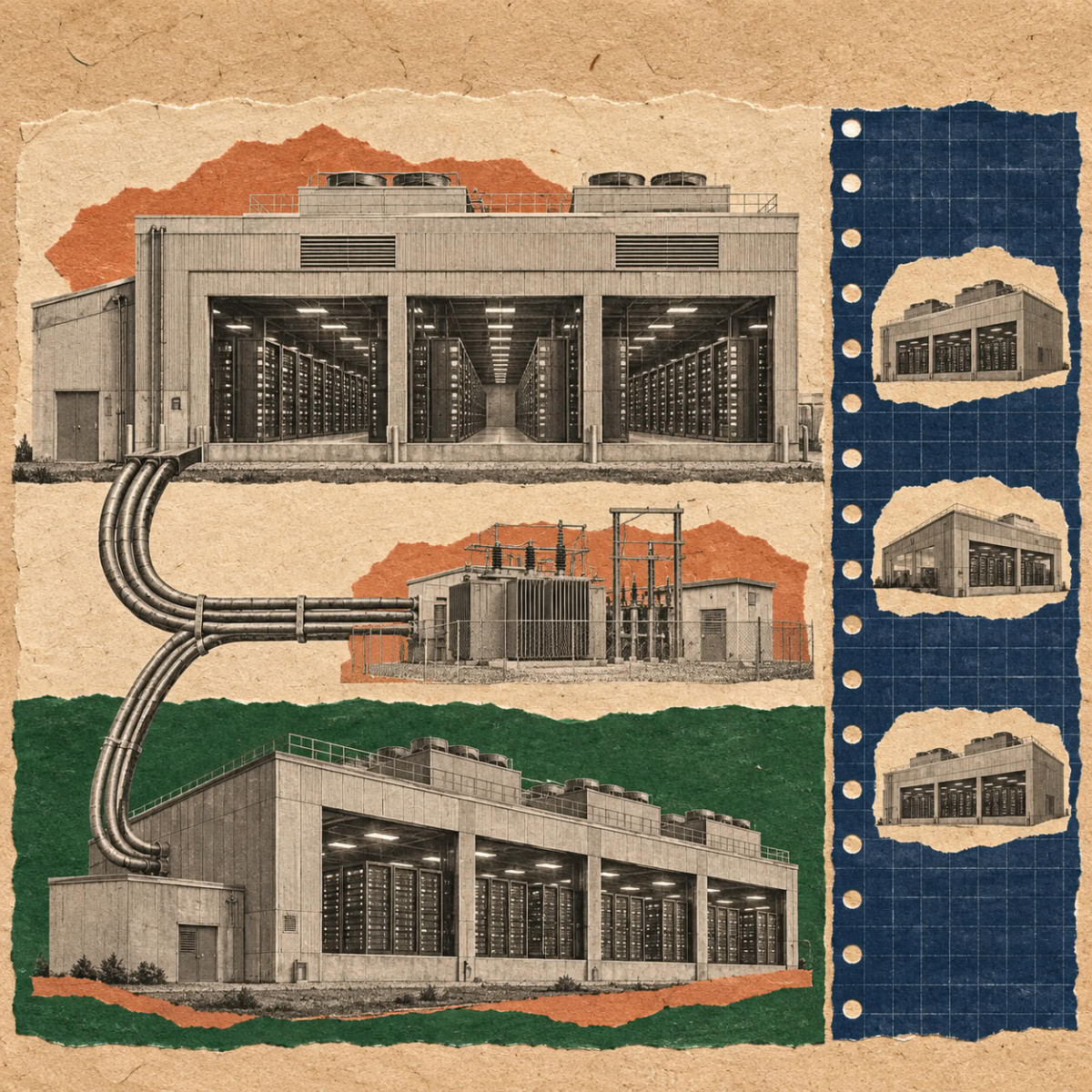

Training the largest artificial intelligence models is no longer just about adding more GPUs (graphics processing units, at the heart of model computation). According to this interview, published as sponsored content, energy availability is becoming a major physical constraint, leading infrastructure teams to consider running a single training workload across multiple data centers.
- Energy availability now limits AI training, so teams consider running one job across several data centers.
- The network must make distant sites work as one deterministic machine.
- Cisco proposes Silicon One and Intelligent Collective Networking to handle synchronized GPU traffic and cut job completion time.
- Hardware-accelerated MACsec and IPsec encrypt data exchanged between sites.
This scenario presents a very different networking problem than traditional inter-site links designed to carry traffic. AI training demands high-volume, synchronous flows, minimal packet loss, and tightly coordinated communication between GPUs. If one part of the cluster slows down, the effect can ripple through the entire job.
A network that becomes part of the computation
In this interview conducted by Tim Phillips of The Register with Rakesh Chopra, SVP, Silicon and Systems Architecture, Cisco Fellow, the discussion centers on what Cisco calls the ‘Scale-Across’ imperative. Rakesh Chopra explains that AI demands are evolving the role of the network, shifting it from a simple transport medium to an element integrated into the computing system. The challenge is to make geographically separate facilities operate as a single, deterministic machine.
Buffering, high-speed coherent optics, and tightly integrated silicon become particularly important when workloads stretch across long-haul fiber links. Cisco’s Silicon One architecture and Intelligent Collective Networking are presented as designed to handle synchronized GPU traffic bursts, reduce bottlenecks, and improve job completion time. The power consumption of the network, and its trade-off with the energy available for GPUs, is also among the central themes.
Security and scalability
The interview also touches on security, with hardware-accelerated MACsec and IPsec protocols. These are protocols for encrypting data exchanges on the network. The role of programmability, which allows infrastructures to adapt to evolving AI workloads, is also discussed.
Aimed at infrastructure and data center managers planning larger, more distributed AI environments, the exchange provides an overview of the networking challenges that emerge when a single site is no longer sufficient. The full interview is available on video.
