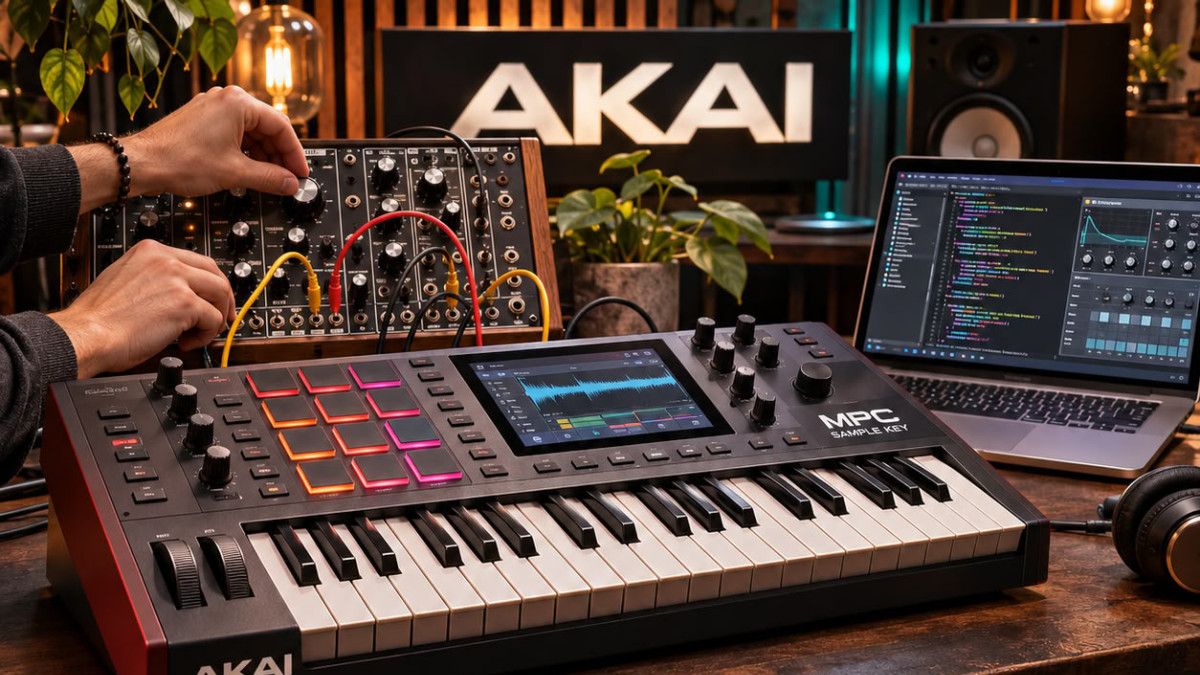

inMusic, the parent company of Akai, Moog, and Native Instruments, aims to open its devices to the tinkerer community. In an interview with The Verge, its CEO Jack O’Donnell announced the release of a “toolkit” for developers. The group plans notably to publish the code for the MPC Sample Key, a device recently unveiled by Akai.
This toolkit will also include an SDK, a software development kit designed to facilitate modifications and reduce the risk of rendering a device unusable, an operation known as “bricking.” Akai has already started providing devices to developers ahead of the official release of the Sample Key.
The group remains mindful of reliability, however. Jack O’Donnell states he wants to “make sure our official software is completely stable and suitable for an artist on stage.” Nevertheless, he wants users to feel free to tinker: “We’ll try to give them a reset button, so they can experiment without losing what they have.”
inMusic plans to present these initiatives at NAMM, the annual music instrument trade show in Anaheim, with a space called Creator Lab. Technically curious musicians will be able to handle 22 new products from across the group’s brands. Among them are Moog devices, whose analog design does not, at first glance, seem suited to vibe coding, i.e., writing code with the help of a generative AI. Jack O’Donnell believes the combination is possible, however, “if we open it up properly,” which will involve a platform allowing developers to work on the analog parts of the circuit.
A broader movement
Other manufacturers have already taken the step. Erica Synths recently published the source code for its LXR-02 drum machine, and Polyend has made open source its Tracker groovebox range. Behringer has for its part announced several open-source devices, including Kick, a $150 clone of the MPC One, as well as a clone of the E-mu SP-1200, the Anima DJ controller, the Ignite sequencer, and the Polykeys 61 MIDI controller.
The change happened very quickly. Jack O’Donnell summarizes: “I can tell you that it wasn’t on our to-do list five weeks ago. All of a sudden, it has to be.”
Reservations at Elektron
Not all players in the sector share this enthusiasm. Elektron has expressed mixed feelings about the rise of modifications produced with vibe coding. The manufacturer has banned links to hacks and modified firmware on its official forums, without banning discussion of them in general, citing the risk of damaging instruments. In a message posted on its forums, the company writes: “We will always warn against modifications to our firmware and/or our machines that could render them unusable (potentially bricked), prevent future updates, or affect warranty coverage.”
According to The Verge, Elektron is not seeking to actively hinder the community, as it’s about banning the publication of links to pirated Digitone firmware. For Jack O’Donnell, trying to contain it would be futile: “You can try to keep them out, but it’s a losing battle… So we want to welcome them.”
