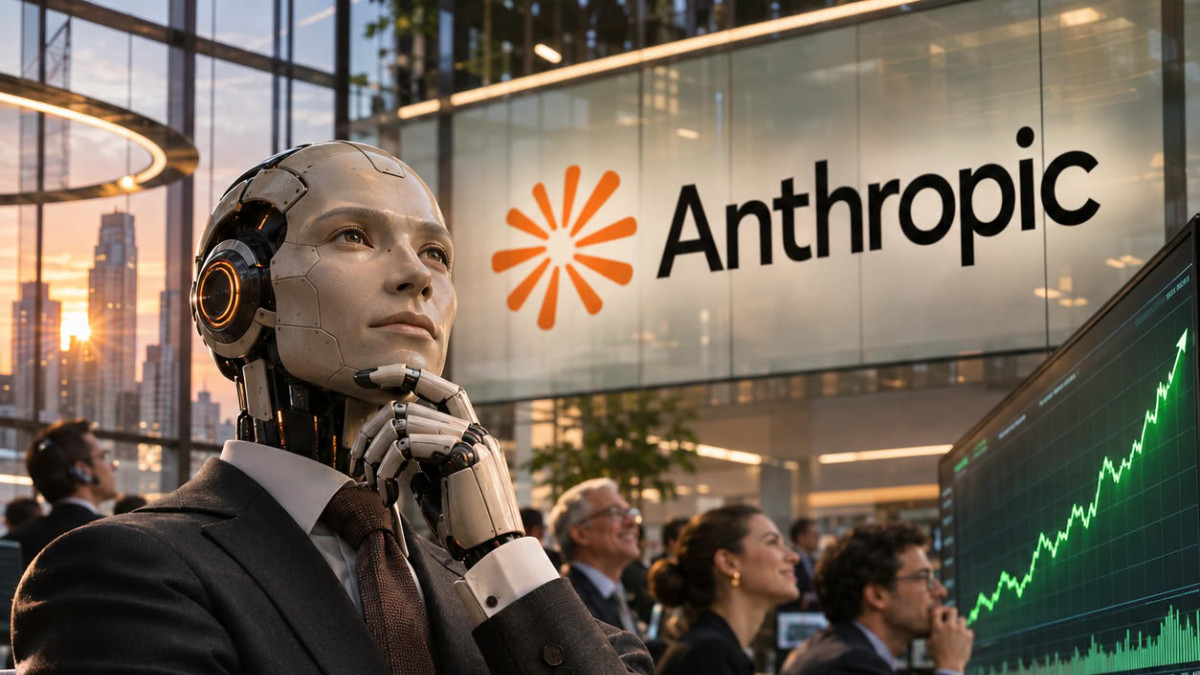

Investors who secured Anthropic shares at the $83 offering price were sitting on a 17.1% gain by the close of trading on Thursday, November 19. Buyers who enter at the end of the first day typically underperform the market over three years, except when founders retain control, as is the case with Anthropic.
A portion of the shares was allocated to funds, but also to retail investors. In the United States, brokers like Robinhood, Fidelity, or Charles Schwab served their clients, while in Europe, a private placement, closed on November 18, placed nearly 9.7 million shares with savers in ten countries, including France. Other investors have been buying at the market price since trading began on Thursday around 5:48 PM Paris time. A French saver who did not subscribe to this offer therefore pays the current price, which was $97.17 at Thursday’s close, and must use a standard securities account, as the French equity savings plan (PEA) does not accept U.S. stocks.
A First Day Above Average
This gain is not exceptional for a tech IPO. Since 1980, U.S. tech companies have gained an average of 31.2% on their first day of trading, compared to 12.1% for other sectors, according to data compiled by Jay Ritter, a professor at the University of Florida and an expert on the subject. Anthropic remains below this average.
Three Years Later, An Advantage That Reverses
What follows is less favorable. Purchased at the offering price, a tech stock outperforms the overall market by an average of 25.8 percentage points over the next three years. Purchased at the closing price on the first day, it lags by 5.1 points, according to the same research, which covers IPOs from 1980 to 2023, excluding the 1999-2000 Internet bubble. The bulk of the gain therefore goes to those who were served before trading began.
One particularity, however, works in Anthropic’s favor. Companies with multiple share classes, a structure often used to allow founders to retain control, perform better: bought at the end of the first day, they beat the market by an average of 13.8 percentage points over three years, compared to a 15.4-point lag for the others, again according to Jay Ritter. Anthropic’s seven co-founders hold a special class of shares that carries 50.1% of the voting rights.
The trajectory of SpaceX, which listed on the Nasdaq on June 12, illustrates the potential volatility. Sold at $135, the stock closed its first session at $160.95, a gain of 19.2%, before climbing to $225.64 during the session on June 16, then falling back to $104.83 during the session on August 3. On November 19, it was worth $138.43: a 2.5% gain for investors served at the IPO, and a 14.0% loss for those who bought at the end of the first day.
Upcoming Milestones
The coming months will be marked by the gradual end of the lock-up period, during which existing shareholders cannot sell. Executives and employees can sell up to 10% of their shares from day one, with other tranches becoming available in stages. More than half of the locked-up shares will become sellable no later than 180 days after the IPO, around mid-May 2027, sooner if Anthropic releases its first-quarter results before that date. The co-founders will then be able to sell up to 29% of their holdings, and everything will be released after one year at the latest.
An exception concerns the $26 billion worth of shares subscribed at the offering price, outside the main operation, notably by Google, Nvidia, AMD, and Microsoft. These shares are exempt from the lock-up, even though U.S. law generally requires a six-month holding period before their resale.
