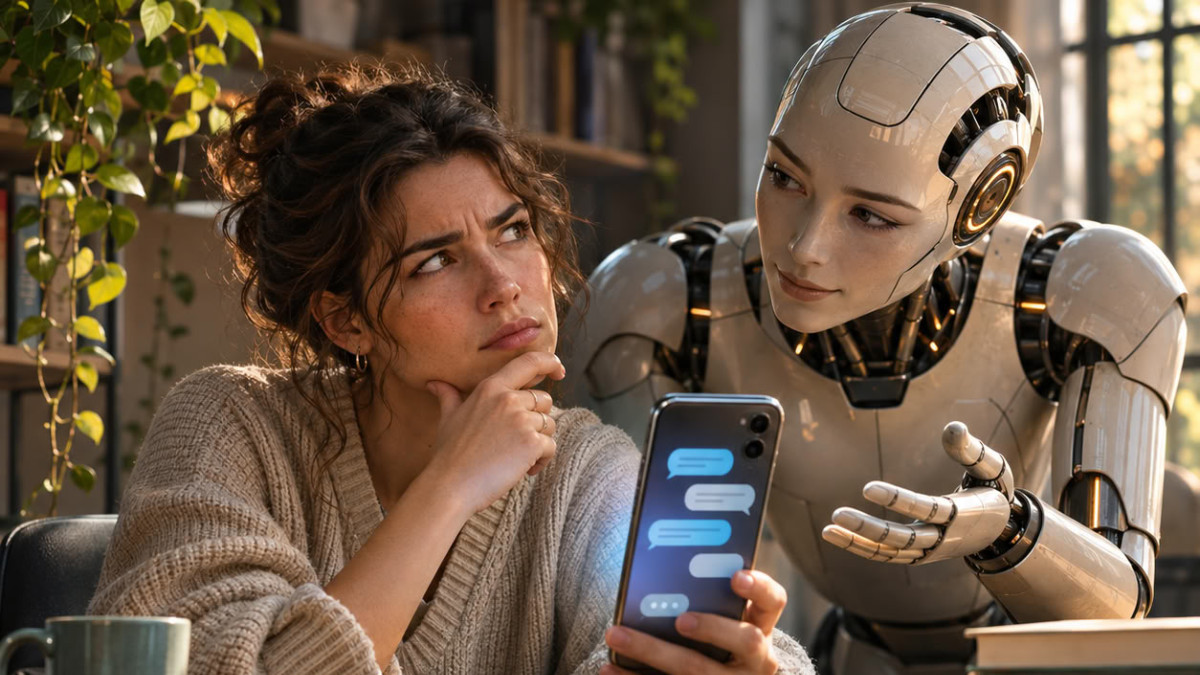

Artificial intelligence is now part of everyday life. We ask it to write texts, find ideas, solve problems, and even give advice. This practical and fast habit seems harmless, but it raises a question: could it turn into a dependency on ready-made answers?
Gradually, users are entrusting AI with tasks they used to do themselves, such as analyzing information, making decisions, or finding solutions to complex situations. Why think for oneself, the text asks, when an answer can be obtained in a few seconds?
A convenience that comes at a price
This convenience, however, has a cost. The risk mentioned is losing autonomy, exercising one’s critical thinking less, and no longer trusting one’s own knowledge. AI is far from knowing everything: it can make mistakes, misunderstand context, and confidently provide incorrect answers.
Technology should help us progress, without replacing experience, emotions, or the ability to decide. As the text summarizes, “AI can show us the way, but it’s up to us to walk the path.”
The text concludes with what it presents as the greatest danger: not that an artificial intelligence might one day become smarter than a human being, but that the human being might “one day cease to call upon its own intelligence.”
