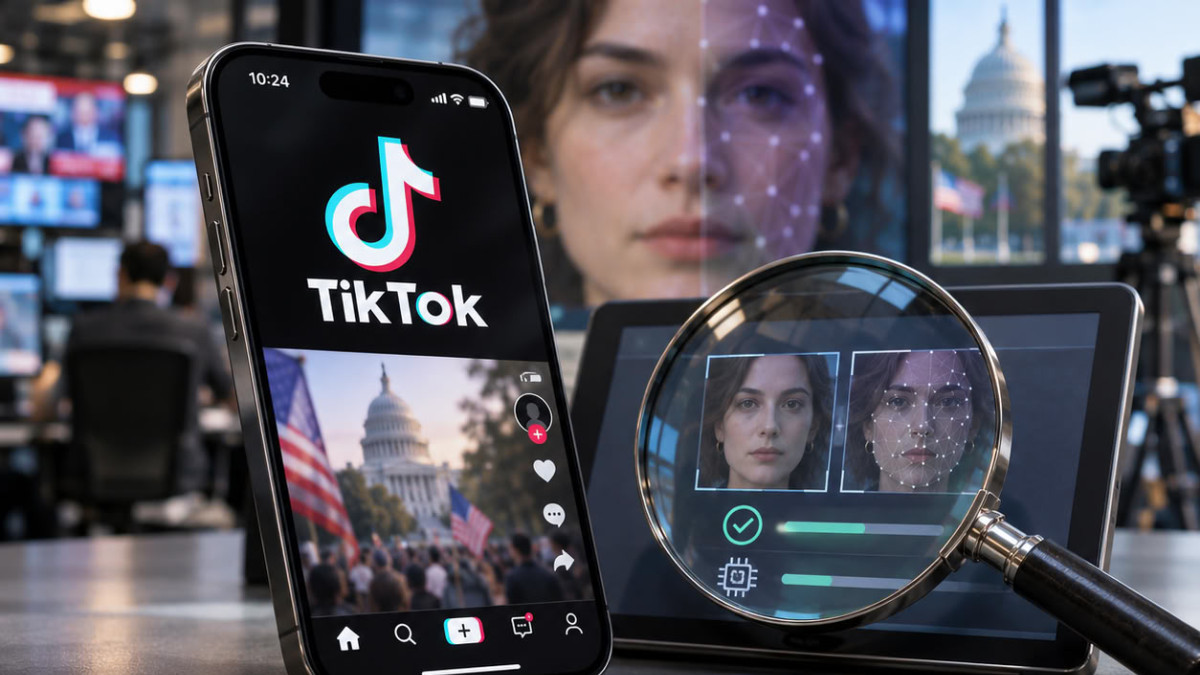

The Chinese platform TikTok is deploying two tools to identify videos made with artificial intelligence: a likeness detector for public figures and a page accessible to the general public. It says it wants to combat misinformation “ahead of upcoming elections in Europe,” five months before the first round of the French presidential election.
Deepfakes, these AI-manipulated videos or images that mimic a real person, are proliferating on social networks and can influence public debate. Legislative elections are scheduled for November 29 in Spain, followed in 2027 by elections in Greece, Poland, Finland, and Estonia.
A Detector Reserved for Public Figures
The first tool is a “likeness detection feature” reserved for eligible content creators and public figures, including “government, political, or political party accounts.” TikTok does not specify a follower threshold. It is designed to identify and report AI-generated content that uses their voice or image without their consent.
The procedure involves three steps. Take the example of a presidential candidate. They first register to have their identity verified “by a trusted third-party partner,” which records their facial data. TikTok assures that this information will not be retained. Next, the candidate is alerted when a video or account uses their image and can verify if it is a deepfake. Finally, they report the misleading content, which the platform will remove according to “community guidelines.” Removal is not automatic.
A Page Open to All, But Hard to Find
The second detector is a web page, which TikTok describes as “a transparency tool that anyone can use.” However, its address is not easy to find: you must go through the platform’s transparency center.
To analyze a video, you must first download it from TikTok. This option is accessible without an account, provided the creator has allowed downloads. The video is then dragged into the detector, which displays a result after a few seconds: content made with or without AI. Tests conducted by the editorial team proved conclusive.
The platform acknowledges a limitation, however. Both features only detect markers associated with TikTok’s and its parent company’s AI tools, such as AI Alive, which creates videos from a photo. If a video was generated by Grok, Midjourney, or any other tool capable of producing videos, TikTok’s detectors will not be able to identify it.
YouTube already launched its own likeness detector in September 2025. According to Google, this tool “allows creators to find on YouTube content where their face appears to have been altered or generated by AI.”
The issue also concerns regulators. In its report on the March 2026 municipal elections, Arcom expressed concern about the “massive” creation and dissemination of “misleading synthetic content.” The regulator cites the case of several candidates in the Creuse department targeted by deepfakes, including the mayor of Guéret, who filed a complaint. These videos, Arcom believes, risk “damaging the reputation of public figures” and “misleading citizens and altering their opinion.”
