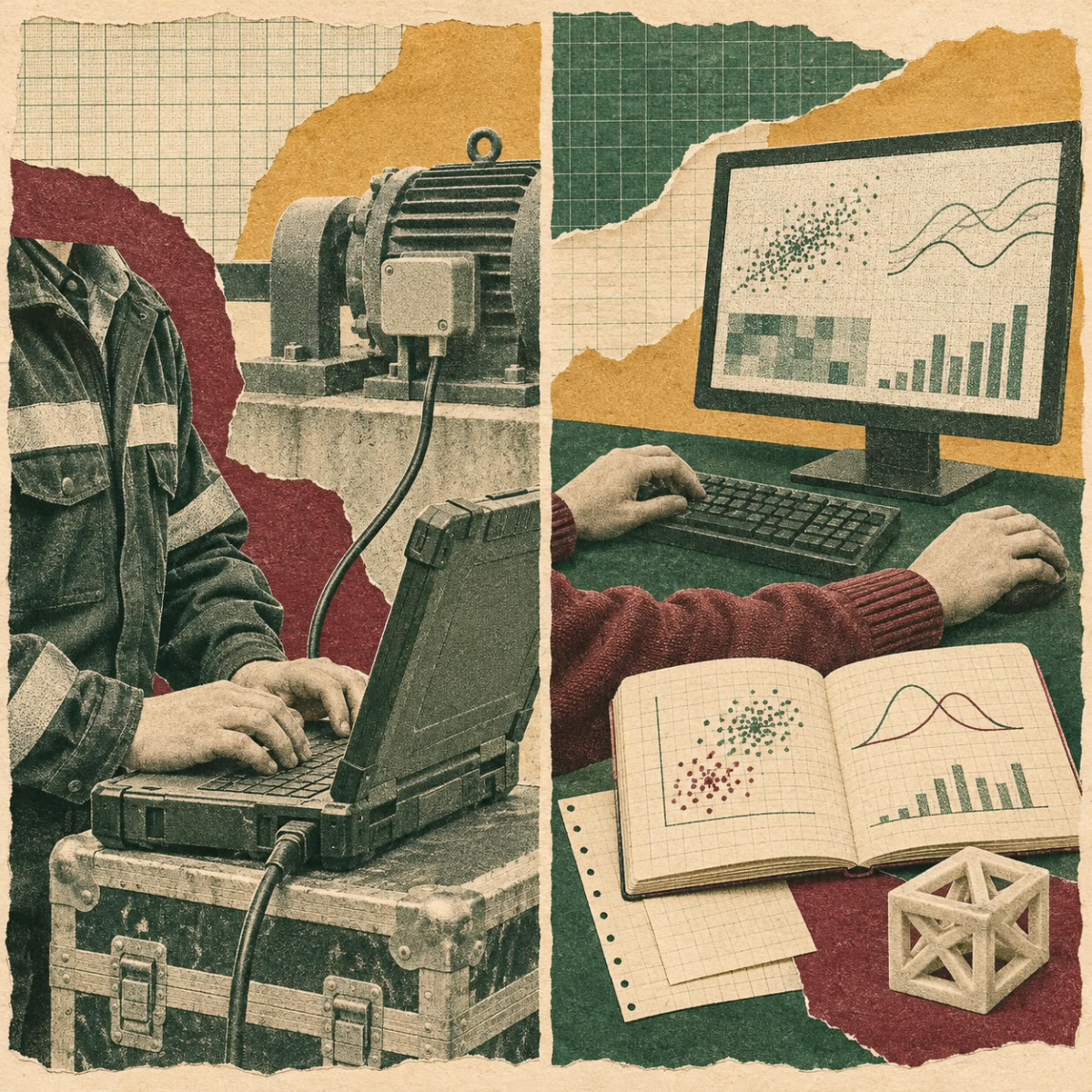

Job postings for ‘forward deployed engineer’ (FDE) and ‘AI engineer’ often request the same skills: Python, APIs, and cloud deployment. Yet, the two roles can lead to very different working days. According to a guide published by Analytics Vidhya, the difference lies mainly in the organization of responsibilities, the problems that reach each, and how success is judged.
- The FDE and AI engineer roles often require the same skills, but their daily work differs.
- The FDE builds and deploys software with clients, working around restricted data and legacy systems.
- The AI engineer maintains and improves an AI product across versions, tracking quality, cost, and rollbacks.
- The two roles overlap considerably, so the job title alone should not guide career choices.
An FDE designs and deploys software alongside clients. In AI companies, this often involves moving a workflow based on a language model (LLM, a system trained on large amounts of text) from initial idea to production. According to the source, the FDE role at OpenAI covers need discovery, technical scoping, system design, implementation, and deployment. The client’s environment shapes the work: restricted data, legacy systems, and undocumented approval rules are part of the problem to solve.
The approach typically follows several steps, from observing usage to sharing lessons learned. The guide highlights this final step: the job description for FDE at Anthropic explicitly includes sharing deployment patterns with product and engineering teams. Work done for one client can thus feed into reusable capabilities, rather than accumulating as specific fixes.
An AI engineer designs and operates software that uses artificial intelligence, whether it’s an assistant, a recommendation service, a vision application, or an agent capable of using tools. Within a product or internal team, this work often continues from one version to the next. As an example, the guide cites the Senior AI Engineer role at Criteo, which includes agents, debugging, deployment, monitoring, and maintenance.
The guide illustrates this continuity with a simple case: a cheaper model handles common questions well but misses unusual exceptions to company policy. Switching models reduces cost per query while introducing a quality problem. The engineer must then have representative evaluation cases, latency and cost metrics, and a way to roll back.
To illustrate the difference, the guide imagines a retailer deploying an AI assistant for its support teams, tasked with answering questions on commercial policy, checking orders, and leaving refunds to authorized employees. The FDE might discover the immediate obstacle is an outdated policy repository, while the AI engineer might find that a model upgrade caused a regression. According to the guide, these different emphases are part of the same engineering effort and do not rigidly divide tasks.
Both roles rely on common skills: software engineering, designing AI applications including retrieval-augmented generation (RAG, which involves providing the model with documents retrieved from a database), evaluation, and productionization. The FDE must additionally know how to ask the right questions of the client and negotiate scope, while the product-oriented role demands deep, lasting knowledge of the system.
The guide also clarifies that the claim that the FDE role offers ‘far more roles’ is not supported by a count of job postings and should not alone guide career choice. According to the source, many FDE positions include implementation, testing, and deployment, and the amount of coding depends on the employer.
