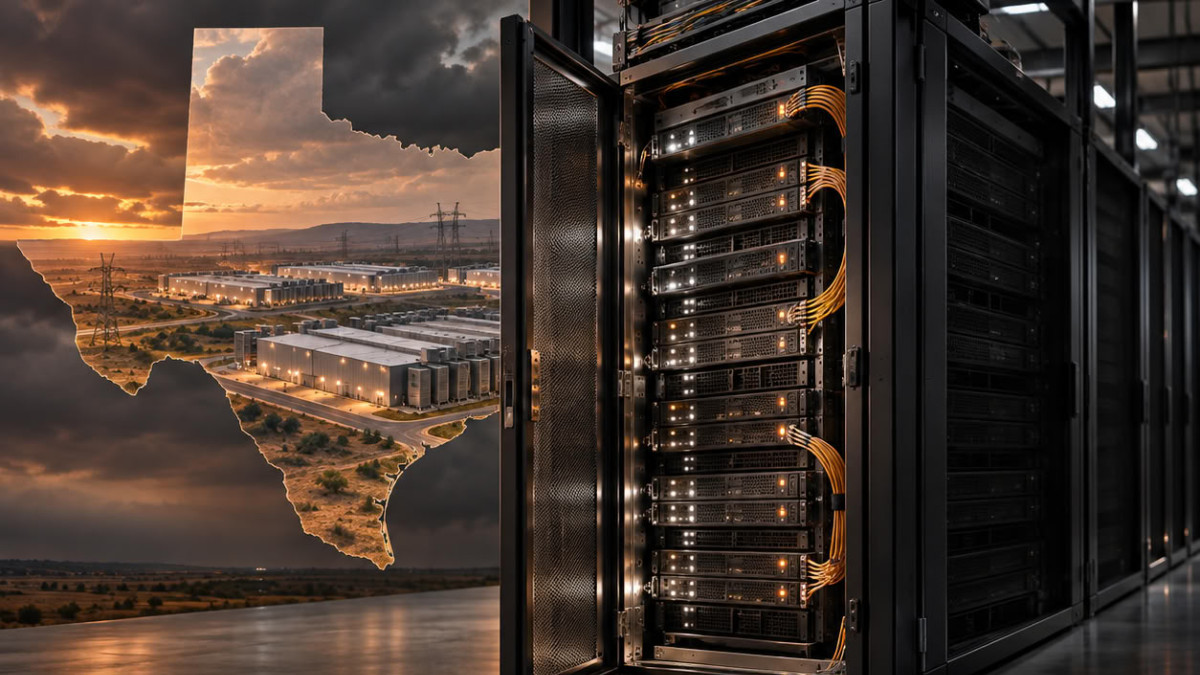

Texas, long considered one of the easiest places to build data centers, is changing course. Since September, Governor Abbott has asked a key state regulator to suspend permits, while Governor-elect Hinojosa is advocating for a complete moratorium. These developments are part of a broader climate of distrust, made visible by the midterm elections.
- Texas, once the easiest place to build data centers, now faces a possible halt.
- Governor Abbott ordered a regulator to suspend data center permits in September.
- Governor-elect Hinojosa supports a complete moratorium on these facilities.
- Voters back protections for electricity consumers and some bans on new data centers.
At the DCD conference in Ashburn, Virginia, on Tuesday, industry speakers lamented that Texas had been the easiest place to build for years, until September. Developers indicated that the governor’s office was no longer responding to their emails. On September 21, Abbott ordered the regulator to suspend the issuance of permits for data centers. Many participants expected existing projects to be slowed and new ones potentially halted.
Projects of Considerable Scale
Hinojosa had supported tax breaks for these facilities in 2023, presented as a way to create construction jobs. During her campaign, however, she advocated for a complete moratorium. Such a measure would pose a problem for major cloud service providers, the Big Tech hyperscalers, who are planning ambitious centers dedicated to training AI models in the state.
The Stargate Frontier project, in Shackelford County, is set to reach a capacity of 1,820 megawatts, roughly equivalent to SpaceX’s Colossus 2 in Tennessee, billed as the largest data center in the country, and more than double the largest site currently operating in Texas. Nexus Hubbard, also under construction, is set to have 6,400 megawatts and will primarily serve Anthropic. It is the second-largest project of its kind in the United States, behind Meta’s Hyperion project in Louisiana.
Cautious Banks and Worried Voters
The prospect of imposed delays or moratoriums on new projects fuels concerns of a slowdown in AI development. Banks and lenders are already becoming more demanding about the projects they finance. Yet the construction of these facilities currently supports a notable share of economic growth, which could have ripple effects.
Voters, for their part, sent a comparable message during the ballot measures related to data centers, whether state-level questions or elections for national offices. They supported efforts to protect electricity consumers from bill increases caused by these facilities. They also showed support for some broader bans on new data centers.
