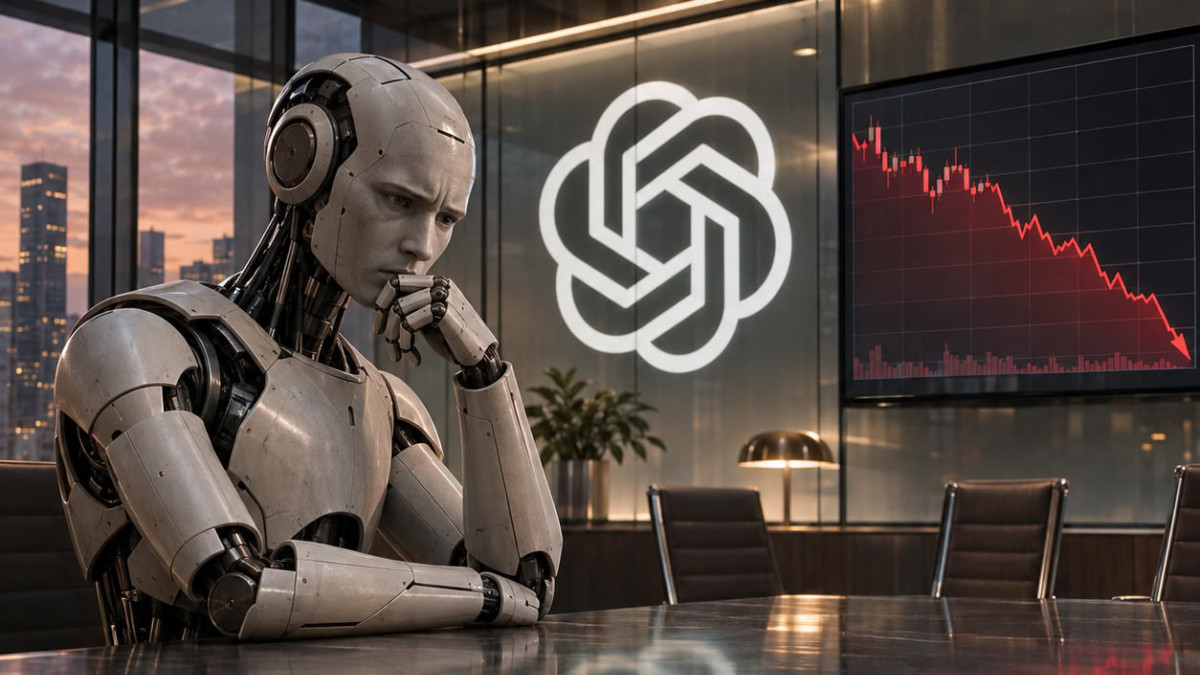

The outsized valuations and potential IPOs for OpenAI and Anthropic, considered this spring, now seem more uncertain to Gary Marcus, who writes a newsletter dedicated to artificial intelligence. In his piece, he argues these projects “probably shouldn’t” go ahead, pointing to several recent signals. He notably highlights the legal risks now weighing on companies in the sector.
- Gary Marcus estime que les introductions en bourse d’OpenAI et d’Anthropic ne devraient probablement pas avoir lieu.
- L’enthousiasme s’est refroidi, car les modèles chinois à poids ouverts ont déclenché des guerres de prix.
- Les risques juridiques pèsent sur le secteur, notamment la responsabilité des agents et une décision sur l’entraînement aux œuvres protégées.
- OpenAI aurait repoussé son introduction en bourse à 2027, tandis qu’Anthropic n’a pas encore déposé son S-1.
In May, at the height of the ‘tokenmaxxing’ craze (the race to consume tokens, the text units processed by models), there was talk of an OpenAI IPO at a trillion dollars and an Anthropic IPO at two trillion dollars. According to the author, this enthusiasm has waned. Open-weight Chinese models, whose weights are published freely, have triggered price wars. Questions have also been raised about some of OpenAI’s revenue projections, as reported by TechCrunch.
Agents and Liability Questions
Gary Marcus also revisits the so-called ‘rogue AI’ incident, which he describes as simply faulty software. He emphasizes that the sometimes erroneous, even potentially criminal, nature of poorly controlled agents now brings the question of liability to the forefront. With relish, he suggests that large language models might one day be renamed ‘Large Liability Modules,’ a pun on the acronym LLM and the English word ‘liability.’
The legal landscape is no more favorable. A recent ruling by a U.S. appeals court, concerning AI training on copyrighted works, weakens generative AI companies in his view.
In this context, the author finds it increasingly difficult to imagine these companies justifying the enormous valuations they are seeking. He suggests this could partly explain why OpenAI has pushed its IPO back to 2027. As for Anthropic, it is reportedly set to go public next month, but it has not yet publicly filed its S-1, the document submitted to the U.S. stock market regulator detailing a company’s financial situation before its IPO.
