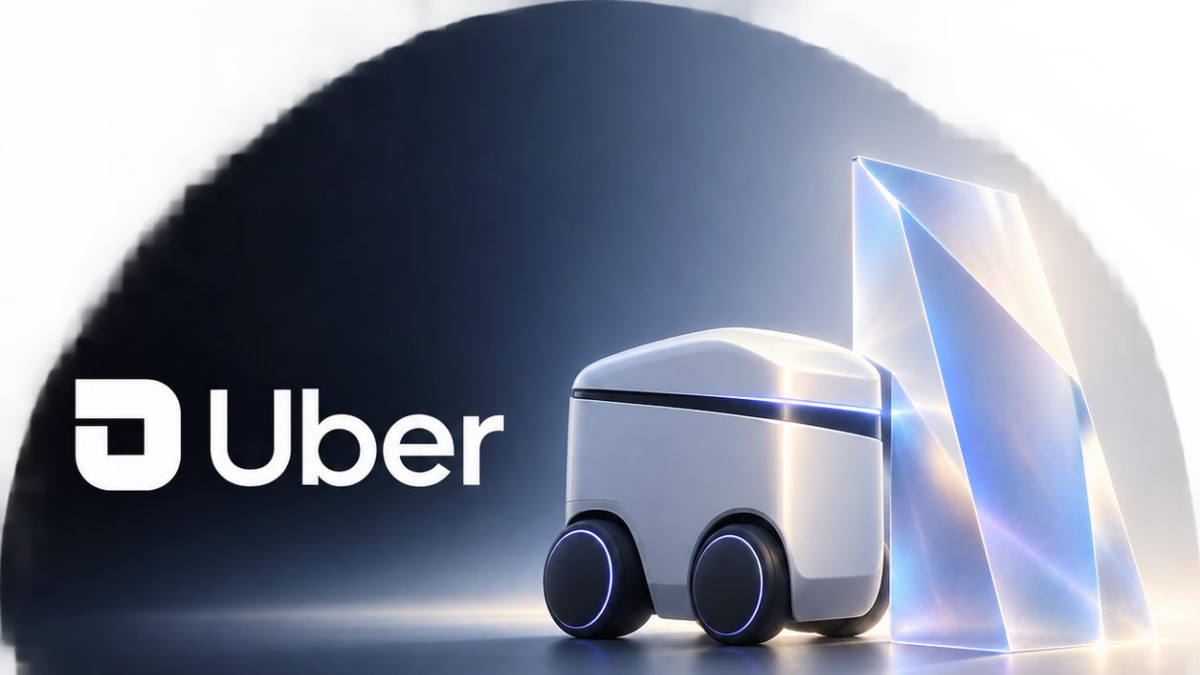

In Philadelphia, United States, a protest against delivery robots ended with a police questioning. Carolyn Marvin, opposed to the automation of goods transport, deliberately prevented an Uber delivery robot from continuing its route near the Reading Terminal Market. She is being prosecuted for disturbing the public order and claims her action falls under freedom of expression.
A robot immobilized in the middle of the street
The robot, which was supposed to transport an order to its destination, was halted by a woman who deliberately blocked its path. According to the reported account, no software malfunction or navigation issue was involved; the device was stopped by human opposition to its presence on the public roadway.
Carolyn Marvin believes that these automated devices directly threaten delivery workers’ jobs and could gradually reduce employment opportunities for those who currently provide these services. Rather than protesting solely with a sign or posting a message on social media, she chose to physically prevent the robot from moving.
According to information reported by ABC13, law enforcement intervened in the Reading Terminal Market area after multiple reports of disruptions on the public thoroughfare. Police say Carolyn Marvin blocked the device repeatedly and refused to clear the passage despite their requests. This series of incidents led to her arrest. She was charged with disturbing the public order, a classification concerning her alleged conduct during the intervention.
A witness recounted initially thinking the device had struck the woman. According to explanations provided by Carolyn Marvin, her action was deliberate: she aimed to halt the robot’s movement in order to denounce the development of these technologies.
The case is not entirely new for her. In September, she had already intercepted delivery vehicles as part of a similar action, an incident widely shared on social media.
Automation and protest in cities
Beyond this episode, the case raises a broader question: what role should autonomous robots play in cities, especially when they perform tasks previously assigned to workers?
Companies developing these solutions aim, among other things, to simplify goods transport and delivery execution. These devices rely on multiple digital technologies that enable them to move, analyze their environment, and manage certain obstacles. Artificial intelligence can contribute to these functions, particularly in interpreting data collected by sensors, but not all automated delivery systems necessarily have the same level of autonomy.
The Philadelphia case highlights a limitation of this automation. Even when a device can follow a route, its operation depends on conditions encountered in public space. A deliberately placed physical obstacle can be enough to interrupt a service, without any computer intrusion being required.
