
For Matt Redwood, Vice President, Global Solutions & Consulting Group – Banking & Retail at Diebold Nixdorf, artificial intelligence is becoming an operational layer of commerce, just as the point of sale was its transactional layer. In an op-ed published by Journal du Net, he argues that retailers risk repeating with AI the mistakes of previous technology waves. According to him, the competitive advantage will largely depend on the ability to make the different intelligences of a retail brand work together.
- AI becomes the operational layer of commerce, and its value depends on how well systems work together.
- Retailers risk repeating past mistakes by multiplying tools that do not communicate.
- The real gains come when AI triggers actions, such as restocking or adjusting prices, not just detecting problems.
- A unified commerce platform with shared data and rules lets brands scale AI across stores and channels.
Retailers could multiply tools without making them communicate, silo their data, and pile up costly integrations. Yet AI is now integrated into the heart of decisions and operations, making these integration flaws even more critical. In five years, brands will likely no longer be distinguished by this or that AI application, but by their ability to connect their data, systems, and processes, and then transform this intelligence into decisions and actions across the network.
From AI to Action
The potential benefits are already concrete: automation of repetitive tasks, freed-up time for employees, optimization of inventory and merchandising, reduction of shrinkage and operational costs, smoother and more personalized customer experience. The value, the author insists, will not come from AI alone, but from its ability to act.
The market is moving in this direction, with retailers shifting from experimentation to seeking measurable results. It’s no longer just about identifying a queue that’s too long, but about recommending, or even triggering, the action that will reduce it. Similarly, detecting a future stock-out is no longer enough: one must anticipate the need and initiate replenishment.
The main challenge lies in a gap: uses are developing faster than the infrastructures capable of making them work together. Many brands already have several solutions, relying on different data, suppliers, and processes. Deploying a first use case remains relatively simple, but scaling it to several hundred or thousand stores is much less so.
A Common Technological Foundation
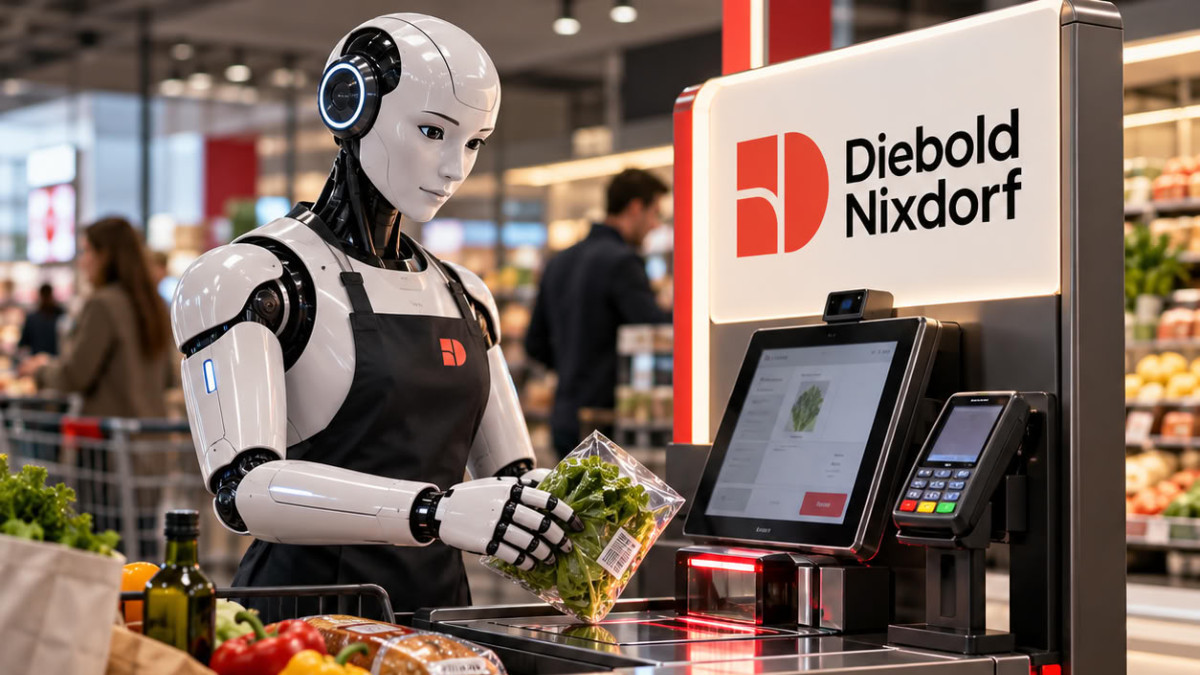
The answer is not to add an application, but to build the foundation that will allow these intelligences to communicate. A unified commerce platform, which centralizes data, business rules, and common components, would allow for the gradual deployment of new uses without rebuilding an architecture each time. A brand could, for example, start with item recognition at checkout, then link this technology to a loss prevention solution.
This logic, according to the op-ed, underpins the smart store. A customer preparing their dinner from their brand’s app browses several products without finalizing their purchase. A unified platform can cross-reference this intent with inventory, loyalty data, and demand forecasts. Upon their arrival in store, relevant products can be highlighted, stocks adjusted, and teams mobilized accordingly.
Ultimately, this collective intelligence will be able to combine computer vision, IoT (connected objects), RFID (radio-frequency identification tags), digital data, and workforce management. It will enable thousands of micro-decisions every hour: reassigning an employee, triggering a restocking, adjusting a price, or modifying a customer journey.
A Question of Scaling
To achieve this, retailers must first define precise business objectives, then build a foundation capable of supporting them. They can then deploy a few high-value use cases, before expanding their capabilities through an ecosystem of partners and data sharing between stores and channels. The question to ask before each new project is therefore simple: how can this solution scale and work with the others?
The challenge of the coming years will not be to see which brand has the most AI, but which one knows best how to make them work together. The retailers who today lay the foundations allowing this intelligence to circulate, decide, and act on a large scale will have, according to Matt Redwood, the true competitive advantage of tomorrow.