
Nvidia CEO Jensen Huang is at the center of a scandal that highlights the strategies of Chinese companies to access American chips, essential in the race for artificial intelligence. He admitted to having had an extramarital relationship with a Megaspeed executive, Alice Huang, who is not related to him. US intelligence suspects she was recruited by Beijing to approach him through this company.
Jensen Huang, a 63-year-old American-Taiwanese, is the co-founder and CEO of Nvidia. The company manufactures GPUs (graphics processing units), chips initially designed for 3D graphics in computers and gaming consoles. Capable of processing huge volumes of data, they are now used on a large scale to power artificial intelligence tools, particularly in data centers. Since the launch of ChatGPT in 2022, these facilities have multiplied. Nvidia’s market capitalization has reached $4.5 trillion, making it, tied with Apple, one of the two most valuable companies in the world.
An Investigation Targeting Megaspeed
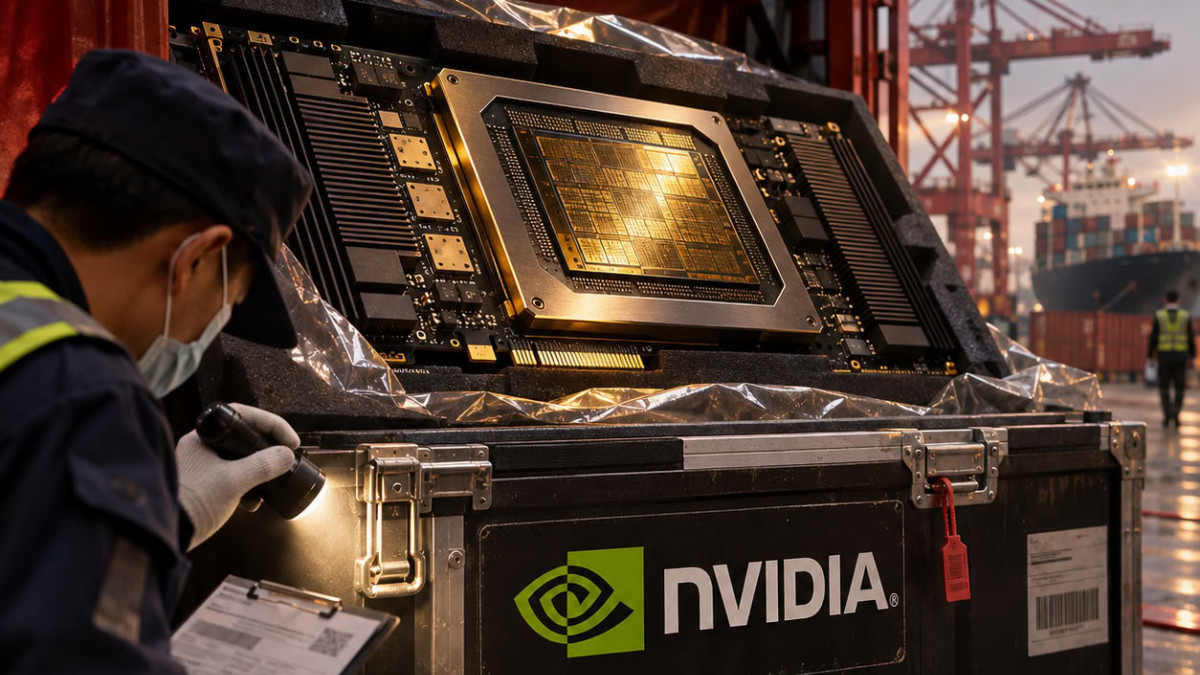
Megaspeed is suspected by the United States of helping bring into China chips subject to export restrictions. According to a New York Times investigation citing anonymous sources, this Singapore-based company is suspected of diverting advanced Nvidia chips to China. The specialized site The Information reported in 2025 that DeepSeek had developed its new model using thousands of chips disassembled abroad and then brought into China. Nvidia had stated it had no evidence of such an operation, which it deemed “implausible”.
Facing competition from Chinese startups like Moonshoot AI, Z.ai, or DeepSeek, whose models are described by the source as high-performing and cheaper in the given context, the United States bans the export to China of Nvidia’s “Blackwell” and “Rubin” processors, citing security concerns. To circumvent these rules, Chinese companies can rent computing power in data centers equipped with Nvidia chips located in another country, often in Southeast Asia. “US export restrictions concern where a chip is sent, not who uses it,” summarizes Stephen Wu, founder of the investment fund Carthage Capital, to AFP.
Evolving Restrictions
Jensen Huang had been lobbying the US government to lift the ban on sales of cutting-edge chips to China, arguing that the restrictions foster the rise of Chinese alternatives. Washington did relax its rules in 2026, but only for the H200, a less powerful Nvidia chip. Beijing, however, appears reluctant to import these chips as the domestic sector develops. Huawei, Nvidia’s main competitor, announced in September that its next-generation artificial intelligence chip would be ready in the first quarter of 2027, three quarters earlier than expected.
Following the revelation of this scandal, Republican lawmakers asked Jensen Huang to come and explain himself behind closed doors on November 18 at the Capitol. Republican Senator John Cornyn, for his part, called for a “Congressional oversight investigation.”
