
Charlie Kemp, co-founder and CTO of Hello Robot, develops mobile robots equipped with arms, designed to help people at home and in the workplace. In this profile, published in *IEEE Spectrum*’s ‘A Day in the Life of a Roboticist’ series, he looks back on his career, from his early work on humanoids at MIT to assistance robots for the elderly and people with disabilities.
His interest in robotics was born from an approach to the grand challenges of artificial intelligence. As a student at MIT, he discovered Professor Rod Brooks’s Cog project, which uses humanoid robots to study embodied intelligence. He then joined Rod Brooks’s lab and worked on the humanoid robot Domo with his co-founder, Aaron Edsinger. Their paper on a system enabling Domo to help a person put objects away on a shelf won the best paper award at the IEEE-RAS International Conference on Humanoid Robotics in 2006. This work steered him towards assistive robotics and later led to a professorship at Georgia Tech. With Aaron Edsinger, he then founded Hello Robot to design non-humanoid robots.
Robots for everyday tasks
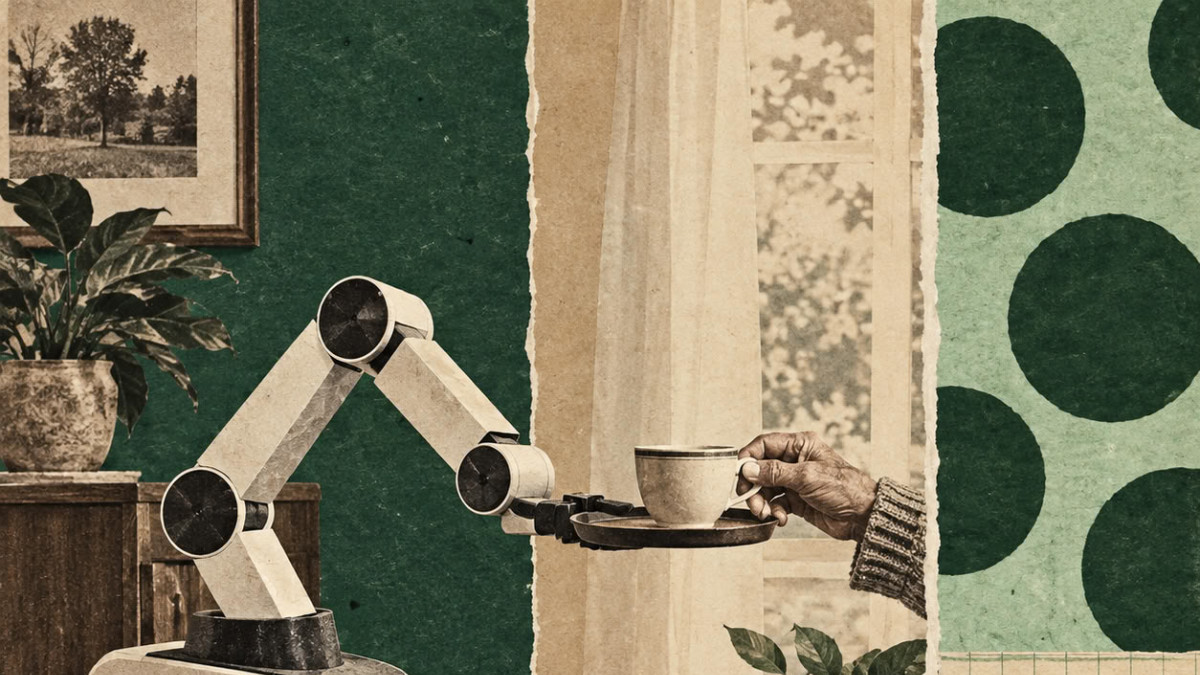
The core of his work involves equipping mobile robots with arms so they can be of service in homes and workplaces. Many promising applications require close physical interaction between humans and machines, particularly to help the elderly or people with disabilities. Charlie Kemp points out that finding human help is becoming more difficult, partly due to aging societies. In his view, robots can improve quality of life and promote independence.
He also describes his daily motivation: ‘Working at Hello Robot is a rewarding experience. I love the community that uses Stretch robots as research and development platforms. They are discovering new ways in which human-adapted robots can benefit society.’
Learning in the field
Among his best days, he cites those spent with the people using the robots rather than with the machines themselves. He mentions Keith, Henry and Jane Evans, as well as hundreds of people who have worked with Hello Robot’s robots or those from his university lab. In his opinion, the answers to some questions are not found by programming alone in a room: ‘You have to go out into the world with an open mind.’ He sometimes observes that autonomy is not the solution, because the person wishes to retain more control.
Hello Robot also includes Vy Nguyễn, clinical research lead, who discovered robotics during her PhD in occupational therapy. Her expertise contributes to the company’s work on assistive robots. Charlie Kemp emphasizes this point: the most useful applications of robots will likely rely on collaboration between robotics specialists and experts in the relevant fields.
Finally, he mentions the Robots for Humanity project. In 2010, Henry Evans, who has severe quadriplegia, saw a CNN demonstration of his lab’s work. This encounter gave rise to a collaboration that continues today. Each generation of the Stretch robot, used by Henry and Jane Evans, has influenced the next ones, particularly Stretch 4. For Charlie Kemp, one memory stands out: Henry Evans used Stretch to hand a rose to Jane. The gesture relies on relatively simple robotic movements, but it produced, in his words, a very strong emotional effect.