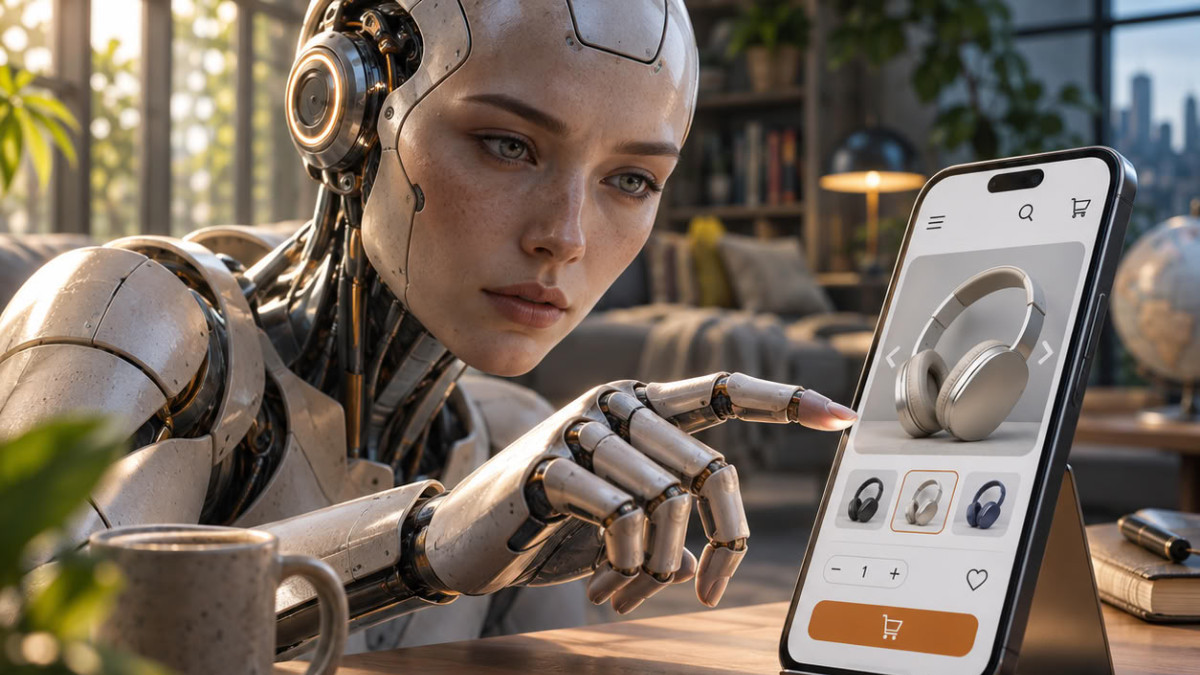

AI agents could transform how internet users buy, browse, and pay for online content. Researchers and experts interviewed by the editorial team see an opportunity to give consumers more power. But the history of the web, marked by the concentration of players, also suggests a possible opposite scenario.
Last year, a team led by Akshit Kumar, a professor of operations management at the University of Toronto Scarborough, studied the influence of search result presentation on agents. Their work shows that these agents recommend products labeled as ‘sponsored’ less often. The models also seem to have a preference for certain positions in the results, but these vary depending on the model and between generations of the same model. For e-commerce platforms, keeping up with these changes could therefore prove tricky.
David Rothschild, an economist at Microsoft Research, is optimistic that this transition could give consumers more control. Today, paying for online content often involves a commitment, like a magazine subscription or monthly support for a creator. Micropayments, which allow buying content individually, have been discussed before, but they have run into administrative burdens. Agents could handle these processes, so that each payment goes directly to the author of the consumed content.
Other specialists share this vision. Mustafaraj, a computer scientist at Wellesley, hopes that agents will allow users to escape the algorithms that govern a large part of the media. ‘My hope is that we can have AIs that work for us, in the sense that they can modify the news feed the way I want, and not the way TikTok wants,’ she says. Varma, from Mozilla, imagines an internet without intermediaries like Airbnb or Doordash, which currently take a commission to connect customers and providers. Agents could talk directly to those of restaurants to have a dinner delivered, without service fees.
The risk of a closed web
This prospect remains appealing, but the article reminds us that the history of the web has been one of concentration of power and control. In early 2026, the personal agent OpenClaw experienced sudden success, briefly hinting at the possibility of agents developed in a decentralized manner. However, OpenAI quickly recruited its creator, Peter Steinberger, and other leading companies launched their own personal assistants.
In this context, users depend on the choices of the companies designing these tools. ‘You have a technology that can simply eliminate all that communication friction,’ observes Rothschild. ‘You’re going to see companies erect barriers to keep the consumer base they have.’ The article takes the example of an assistant named Muse, which would become the default way to find information or make purchases. In theory, its users could use it to contact sellers directly, but the company might prefer to keep them within its own ecosystem, favoring its social networks or companies that have paid to appear at the top of results. Meta and OpenAI did not respond to requests for comment from the editorial team.
A more closed web nevertheless has some advantages. Agents can also be used by hackers and scammers, and large companies have implemented safeguards to limit these uses, including tools capable of detecting a request related to hacking and blocking the model’s response. In a completely open ecosystem, someone would undoubtedly end up releasing a system devoid of these restrictions. Companies also have a reputational interest in preventing their agents from making major mistakes, such as validating a significant purchase that the user did not intend, which explains the efforts made to make these safeguards reliable.
