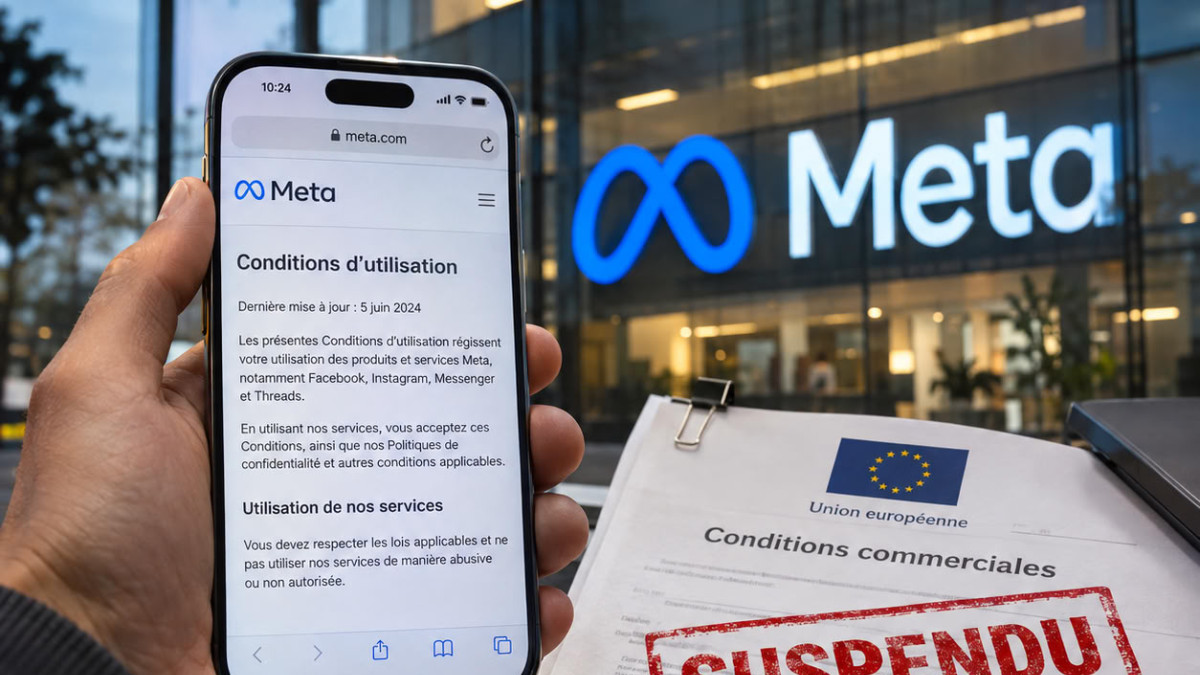

Meta has announced it is abandoning, at least for now, its new commercial terms, which had raised concerns among content publishers. The group stated it does not intend to change its policy without a full consultation with industry organizations and officials.
- Meta abandons, for now, its new commercial terms in Europe.
- Publishers criticize the terms because they allow Meta to use collected content to develop any commercial product.
- Meta claims that robots.txt preferences remain respected, but the revised terms do not mention them.
- Meta will not change its policy without a full consultation with industry groups and officials.
Criticisms focused notably on content collection. For one publisher, cited in the source, Meta “thinks we don’t know how to read?” They argued that removing the word ‘train’ from the terms of use was hardly reassuring, since the verb ‘develop’ posed the same problem. According to them, the group reserves the right to use all content it collects to develop “any commercial product.” “Come on, seriously,” they added.
In the United States, concern crossed political divides, according to Nieman Lab. Senators Adam Schiff (Democrat of California) and Marsha Blackburn (Republican of Tennessee) sent letters to Mark Zuckerberg asking him to withdraw these terms.
On October 28, Andy Stone, Meta’s Vice President of Communications, posted a message on X. “We’ve heard feedback from publishers on our proposed update to advertising and commercial terms,” he said. “We deeply value our partners and do not plan to change the policy without a full consultation with groups and industry officials.” He specified that this consultation could extend beyond November 20, in which case the effective date of the updated terms would be postponed.
Meta asserts on its part that its terms of use will never be used to circumvent the robots.txt file, a technical file through which a site indicates to web crawlers which content it does or does not accept to be collected. In an update sent to professional page holders, the group reiterated that “our crawling practices remain unchanged, and content owners can continue to indicate their crawling preferences via robots.txt.”
These assurances were not enough to quell criticism. As regulatory and judicial pressure mounted, Nieman Lab noted that Meta, while taking steps to address publishers’ concerns, “did not include any specific language about respecting robots.txt preferences” in its revised terms of use.
