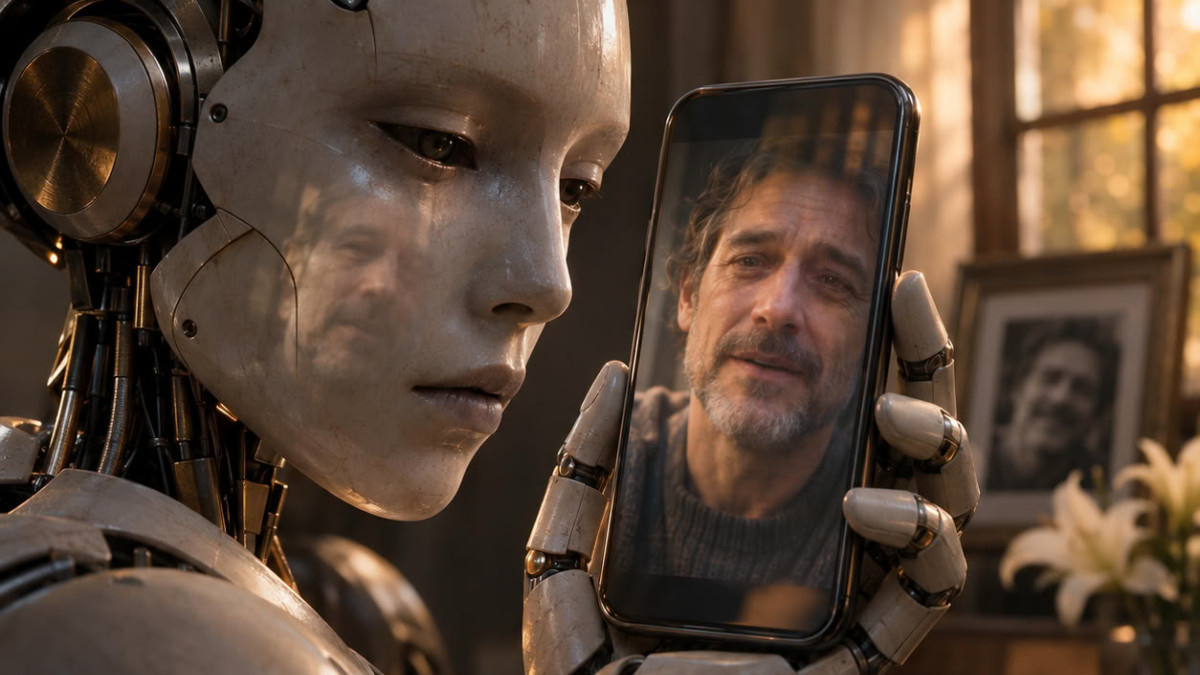

With advances in artificial intelligence, a question is taking on a new dimension: what happens to our photos, messages, and voice after we die? In the United States, a video recreating a deceased man led a court to overturn a prison sentence.
The case takes place in Arizona. In November 2021, Christopher Pelkey, 37, is shot and killed during a road rage incident. A man is convicted of manslaughter under U.S. law. In May 2025, during the sentencing hearing, the victim’s family presents an unusual video, in which Christopher Pelkey appears on screen and addresses the court himself. ‘I am a version of Chris Pelkey recreated using artificial intelligence that uses my photo and the characteristics of my voice,’ the man on the screen says.
He obviously never spoke these words. His sister participated in creating this digital avatar, using images and recordings of her brother, and she wrote the text. The goal was to show the court what kind of man Christopher Pelkey was. The video goes further, as the avatar addresses the man who shot him directly: ‘In another life, we probably could have been friends. I believe in forgiveness and in a God who forgives.’ These words, imagined after his death, give the impression that the victim forgives his attacker.
Sentence overturned on appeal
The judge tasked with determining the sentence was moved by this intervention. He stated he found the video authentic and highlighted the expressed forgiveness. Gabriel H. was sentenced to ten and a half years in prison. However, the case took a turn on September 30, 2026, when the Arizona Court of Appeals overturned this sentence.
According to the court, the trial judge relied on an AI-generated video that could not be considered a reliable expression of the victim’s thoughts. The words attributed to Christopher Pelkey were written by another person, and their presentation in the likeness of the deceased compromised the fairness of the proceedings. Gabriel H.’s conviction is upheld, but a new hearing will be required to determine his sentence. The decision raises a major difficulty: when an artificial intelligence faithfully reproduces the face and voice of a deceased person, how can one distinguish their true convictions from words attributed to them by others?
Varied legal responses
In China, the Supreme People’s Court issued guidelines in September 2026 concerning disputes related to artificial intelligence, which also address digital reproductions of deceased persons. Relatives can seek compensation when the creation or unauthorized use of an avatar infringes upon the deceased’s name, image, or reputation. This is not a general ban on digital resurrections, but a framework for their uses.
In Denmark, a bill introduced in October 2026 aims to protect individuals from the public dissemination of realistic digital imitations of their appearance, voice, or movements without their consent.
In France, citizens seem reluctant. According to a Harris Interactive survey conducted for the CNIL in November 2024 and published in 2025, 72% of respondents would refuse to feed an artificial intelligence intended to create a digital double of themselves after their death. About half would prefer their posts to be deleted after their death, while others would like to preserve certain content, particularly memories intended for their loved ones.
The General Data Protection Regulation (GDPR) does not directly apply to the data of deceased persons. In France, Article 85 of the Data Protection Act, however, already allows for organizing their fate. Individuals can write directives during their lifetime regarding the retention, deletion, or communication of their personal data after death, and designate a person to ensure these wishes are respected. These directives can be general or pertain to a specific service.
